

A couple of weeks ago, I made my first trip to Vermont; in fact this was my first trip to New England. My ancestors on my Dad’s side are all from New England – after they immigrated here a long time ago, but I had never been to this part of the United States. One of my major investment client’s moved to Vermont from Salt Lake City a few years ago. And with the handoff to my successor, I wanted to make one last visit. Laura, my successor, was also coming there to make sure that Sheldon and Randy, my clients, would be comfortable.
And being an avid photographer, I booked a few extra days to do some exploring. Sheldon and Randy live in a little town called Underhill, about 16 miles east of the Burlington, Vermont airport. Now I had seen tons of photos of Vermont, but I still didn’t really know exactly what to expect. I knew it would be beautiful, but I was so surprised at the lack of crowding. This part of Vermont was way more rural than I could have foreseen.
I was literally out of Burlington in just a few minutes – at rush hour! Soon, I was just on two or four lane roads going from one small town to the next. Speed limits were 25 to 30 miles per hour (40 to 50 kph) through the towns, and mostly around 45 to 50 mph (70 to 80 kph) between the towns.
My first big surprise was the traffic – not nearly as much as I expected! Along the Wasatch Front in Utah (about a 100 mile stretch of various cities and towns all run together now from Spanish Fork at the south through the Salt Lake metro area to Ogden in the north) rush hour is traffic hell! And it’s not one hour! No! “Rush hour” starts around 3 pm and goes well into the evening until around 7 to 7:30 pm. But NOT in Vermont! A few cars at stop signs or lights, and in Burlington, maybe you wait for two lights at most – at 4:30 pm! Wow!
Sheldon and Randy’s house was built in 1832 – nearly two hundred years old! Now I know by European standards this is not that old, but by most US standards that is ancient. Other than some indigenous pueblos, or Spanish missions, in the Southwest where I grew up, most old buildings are only a bit over 100. So, this was my second surprise. Now, some of these old buildings look their age, but many do not. Sheldon and Randy’s place is very well modernized with up to date heating and cooling, and of course modern electric and electronics. But the house still has a nearly two hundred year old foundation, walls, floors, etc. Very cool!
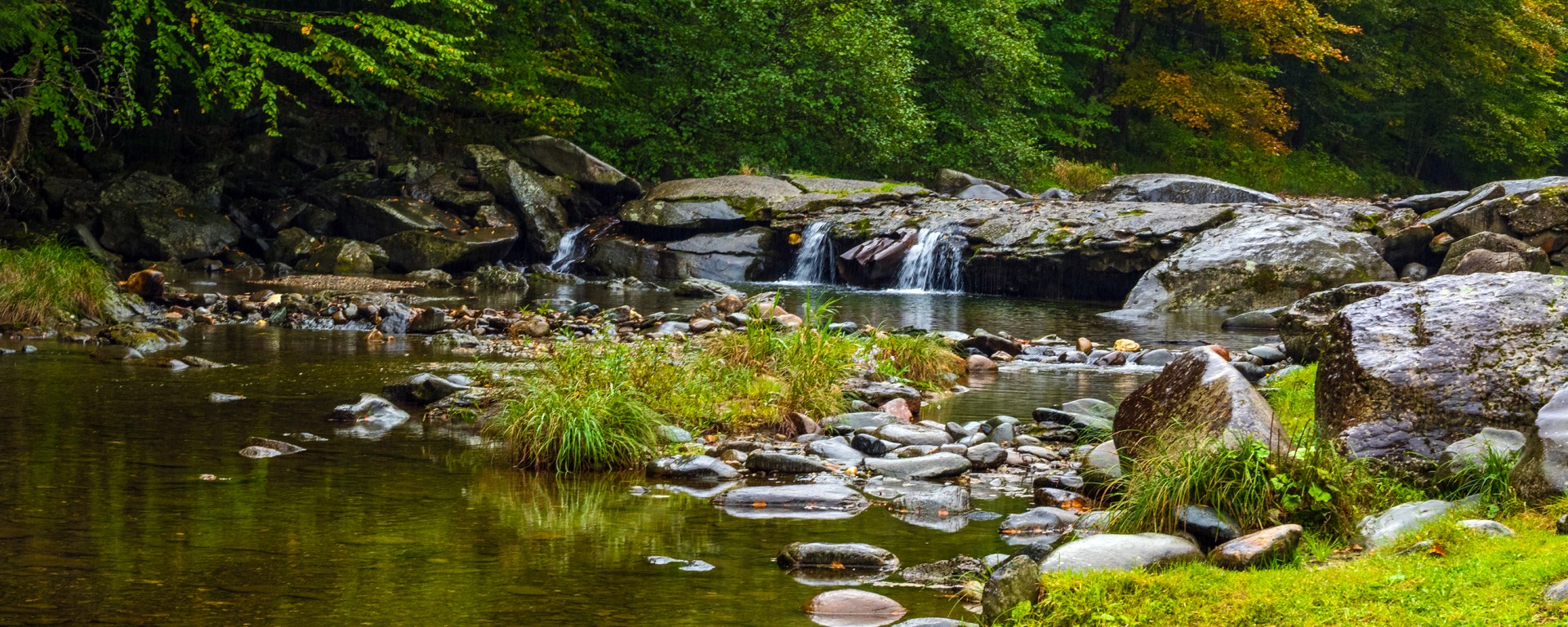
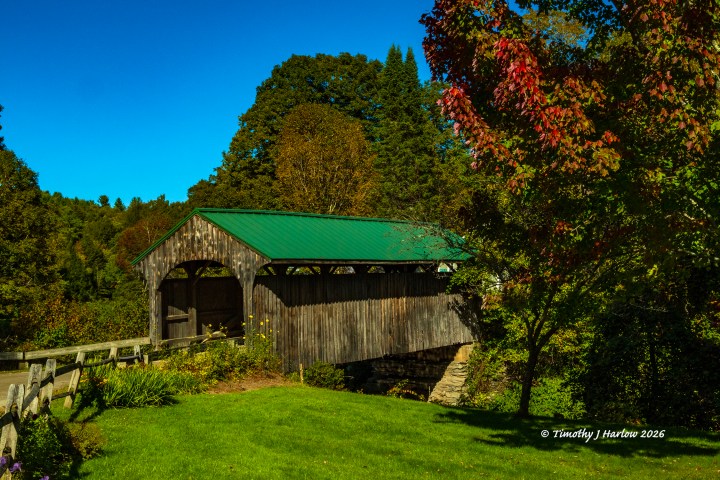
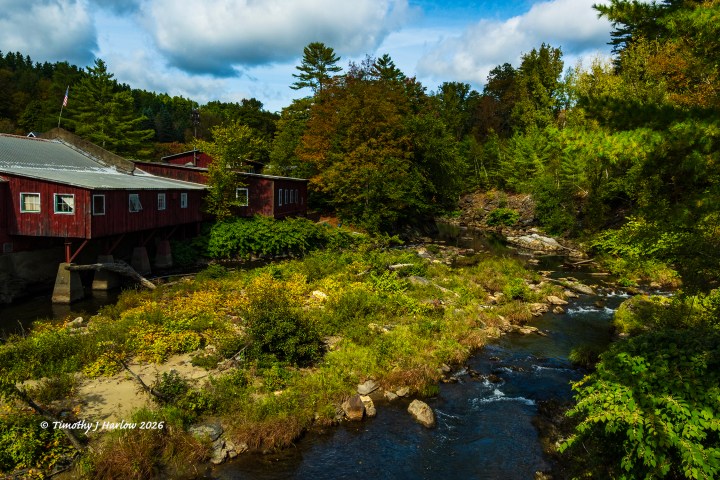
Living my entire life in the western US, I was surprised by the numerous rivers and streams. I mean I knew there would be more water, but there were bridges over streams and rivers everywhere! It seemed rare to drive more than a few miles without crossing a river. And these eastern rivers/streams are much different than their western counterparts. Like all rivers there are sections with meandering flows that have bends every few yards (meters), and other sections with strong flows, rapids, or even falls.
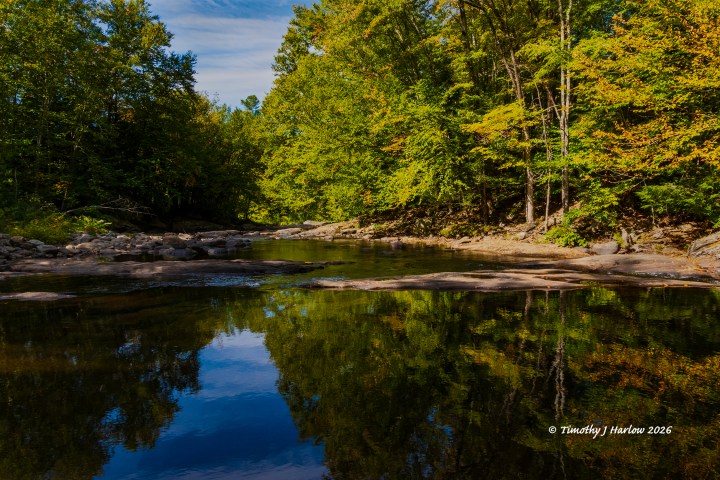
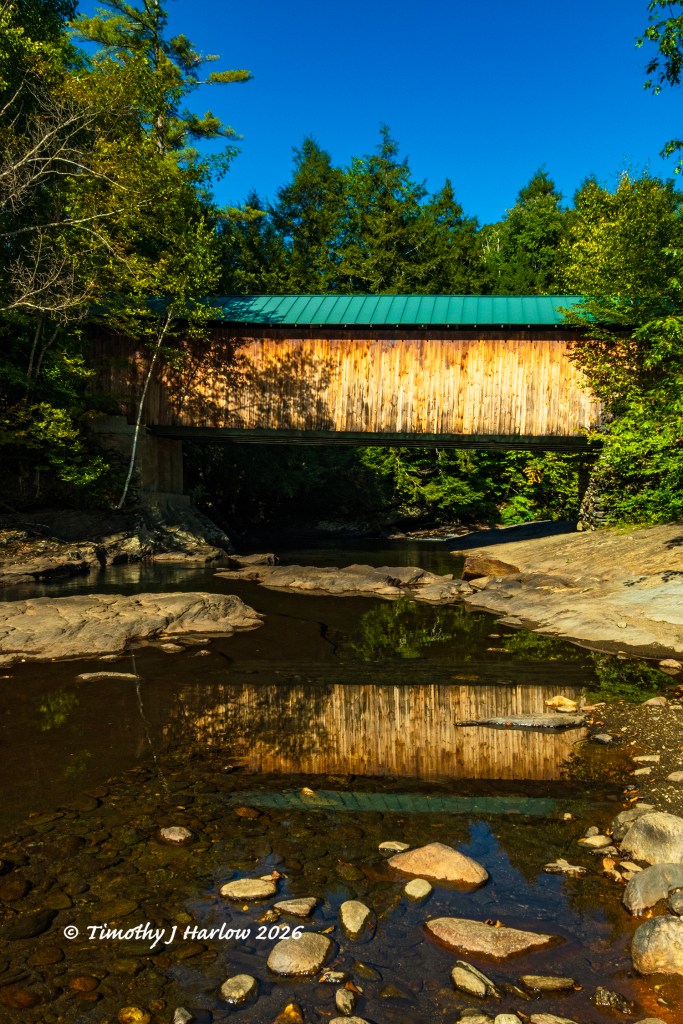
But in the west, most riverbeds/streambeds are made of smaller rocks – stones that have been rolled over many millennia into mostly round stones or smaller gravel. But here, the river beds had many sections of sold rock – old rock. Many of the rivers had beds formed with granite, slate of even marble! This just astounded me! These are old mountains and old rock.
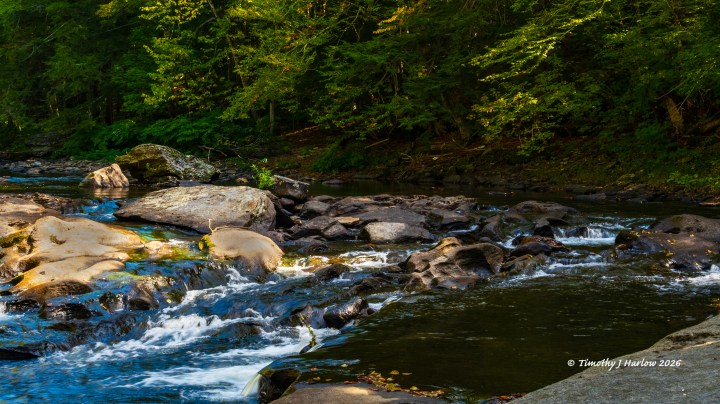
Vermont was covered in glaciers during the last Ice Age, and much of the bedrock is well over One Billion Years old! The Appalachian mountains that run through the state are ancient; their earliest beginnings formed during first supercontinent, Rodinia around 1.1 billion years ago, and even today, some of the rocky outcroppings you see are that same rock – over one billion years old. And then during the Pangea supercontinent, the more modern version of the Appalachians began to take shape. These are literally the same mountains that now make up the Scottish Highlands in the UK, the Norwegian mountains and even the Atlas Mountains in north Africa. This supercontinent mountain chain was broken apart as Pangea split due to our planet’s tectonic plates spreading over millions of years. These mountains were formed around 480 million years ago and once stood as high as the Alps in Europe and the Rocky Mountains in North America. But these ancient mountains have been worn down with over 240 million years of erosion from wind, water, and ice.
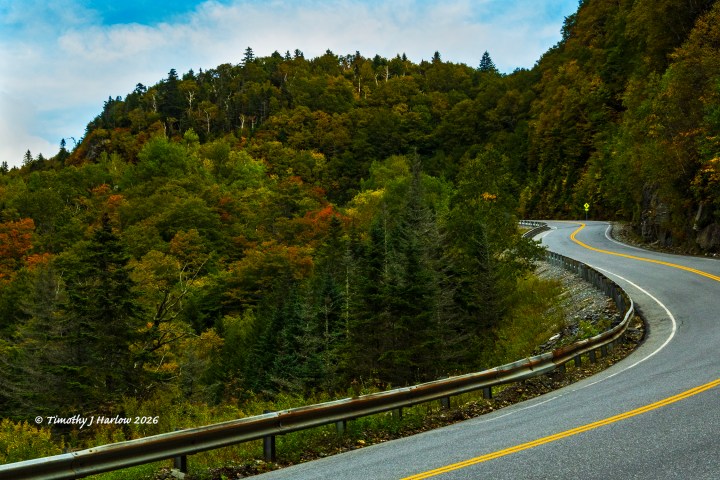
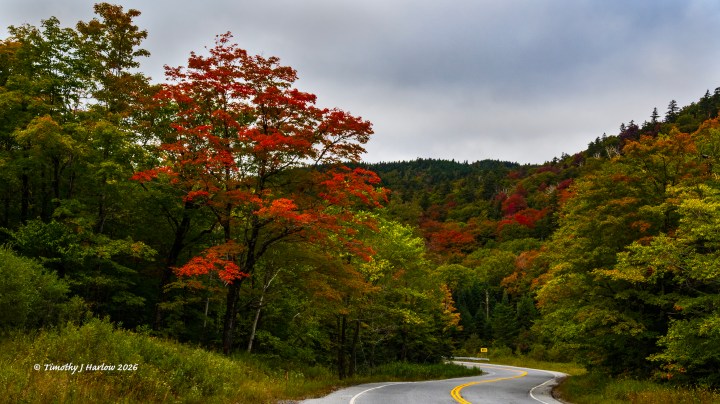
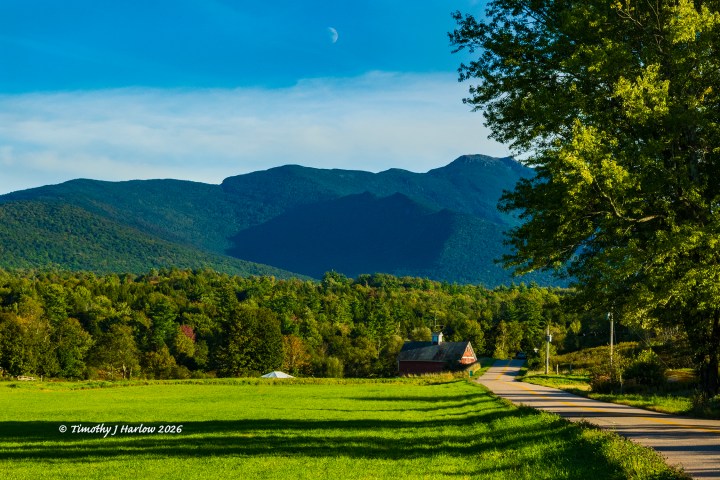
So, the beautiful Vermont mountains were yet another surprise. I had of course seen lots of pictures of the New England mountains, but I guess my western US prejudices had me thinking that these “mountains” would be more like the midwestern hills. But, no! These are real mountains! Now, these mountains do not have the intense ruggedness of the North Cascades, the Wasatch, or the Colorado Rockies. They are way older. But there are still prominent peaks. Mount Mansfield, the highest peak in Vermont, stands at 4,393 feet (1339 meters). But, it rises well over 3300 feet (1005 meters) above the valley floor. And the huge rocks and boulders are just amazing! These mountains were way more impressive than I had imagined. More time hiking around here is definitely on the list.
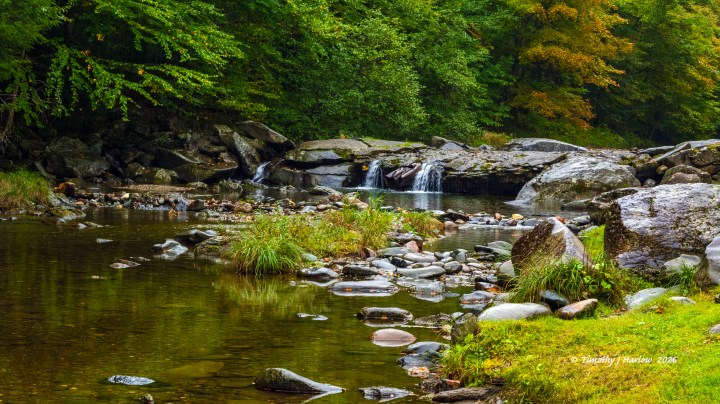
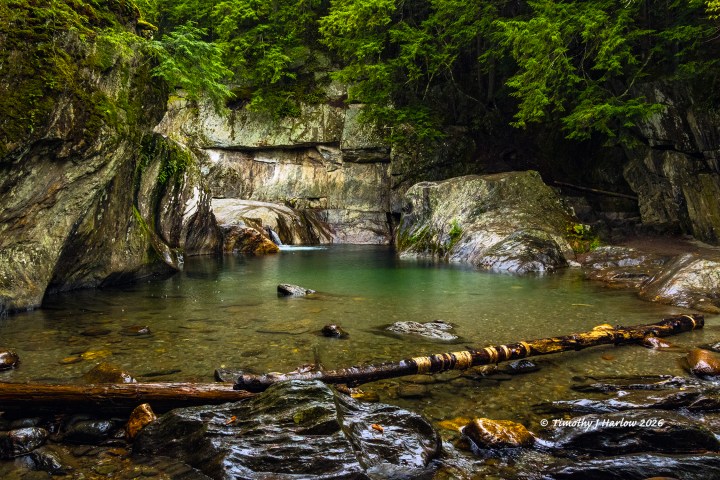
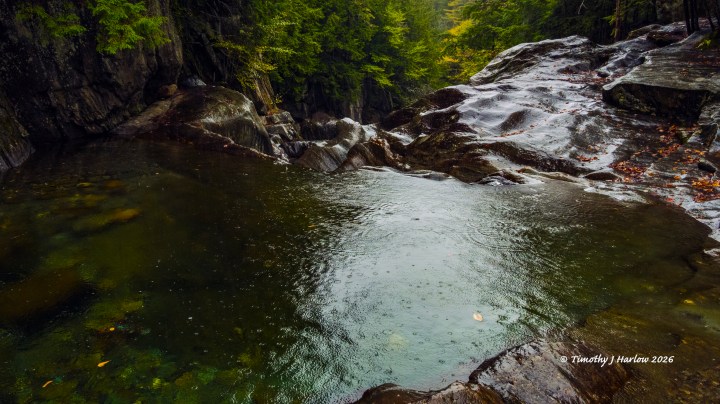
Speaking of hiking, my hosts took me to this little town named Warren, and not far out of town up in the mountains is a place called Warren Falls. From the parking area, there is a short hike through the woods to view the falls and the various pools before the river cascades down some serious falls. Sheldon grew up in New England, and she told me that she had her family used to come up here when she was a kid. They would hike around and play and swim in the deep pools created by the falls.
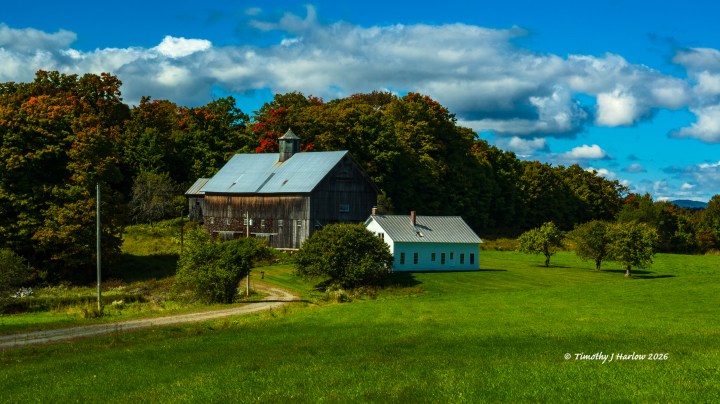
Now besides these beautiful rivers and bridges, northern Vermont is farm country. And with farms come cool old barns. Vermont has no shortage of awesome barns. Most of these farms are small by western US standards, but they are still family owned. And being farm country, there are farmers markets and stands everywhere. We had some incredibly delicious fresh corn on the cob from one of the local stands near Underhill. And every morning breakfast contained lots of fresh berries – blueberries and strawberries. And being Vermont, you could find maple syrup just about everywhere. I learned right away that you put some maple syrup on your yogurt and berries. Delicious!!
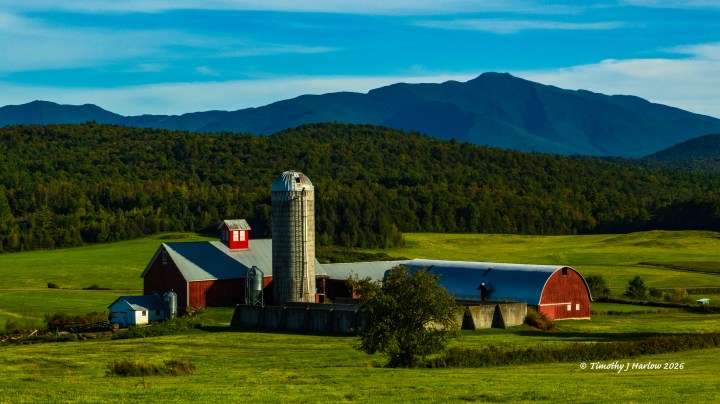
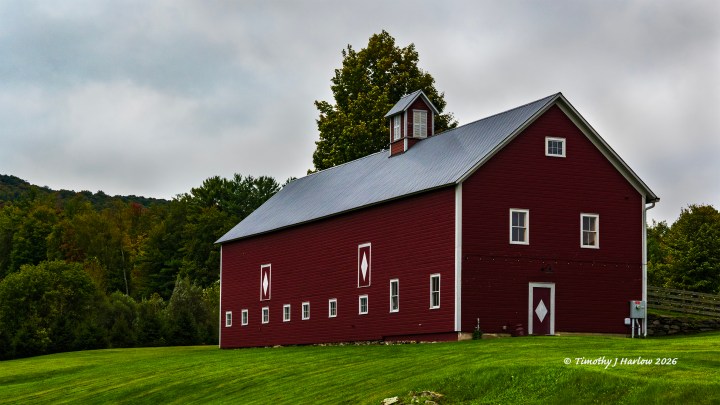
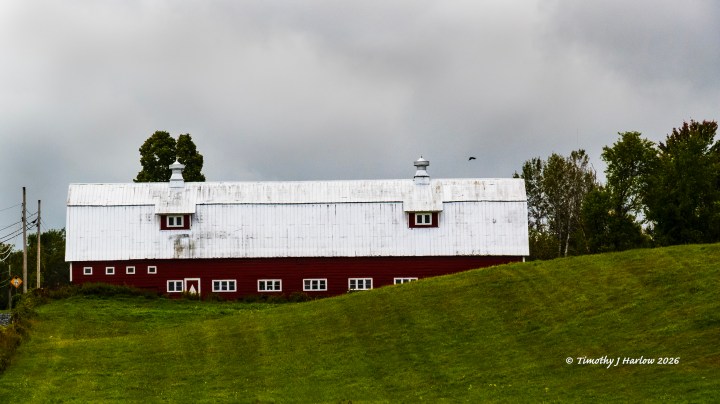
Now, no tour of northern Vermont would be complete without the famous Stowe Church. This church is featured in almost all of the major Vermont tourist photos, so I had to give it a shot (sorry for the pun) too!
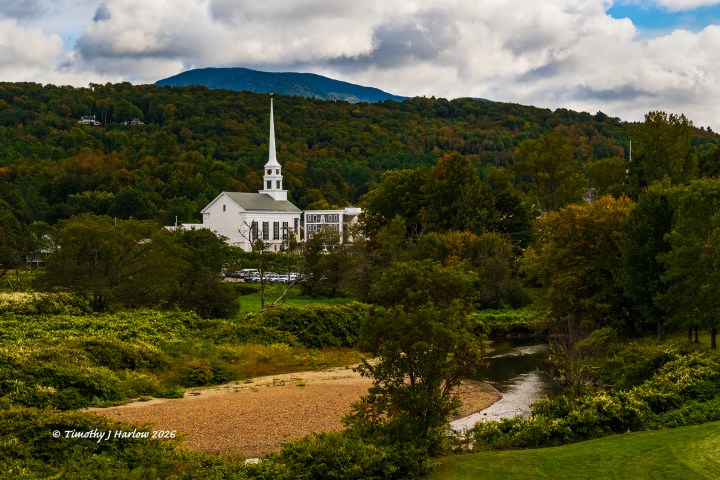
Well, that’s about it for the photo tour of the more rural part of northern Vermont. And indeed, I was surprised by so many things, but most of all the peacefulness of this part of the US. Life here takes a bit of a slower pace, and in this crazy world that is a good thing!
I hope that you enjoy these photos and my tour narrative. Thank you so much for taking time to visit my blog. Have fun out there, and think peaceful thoughts. We all need that now.


