

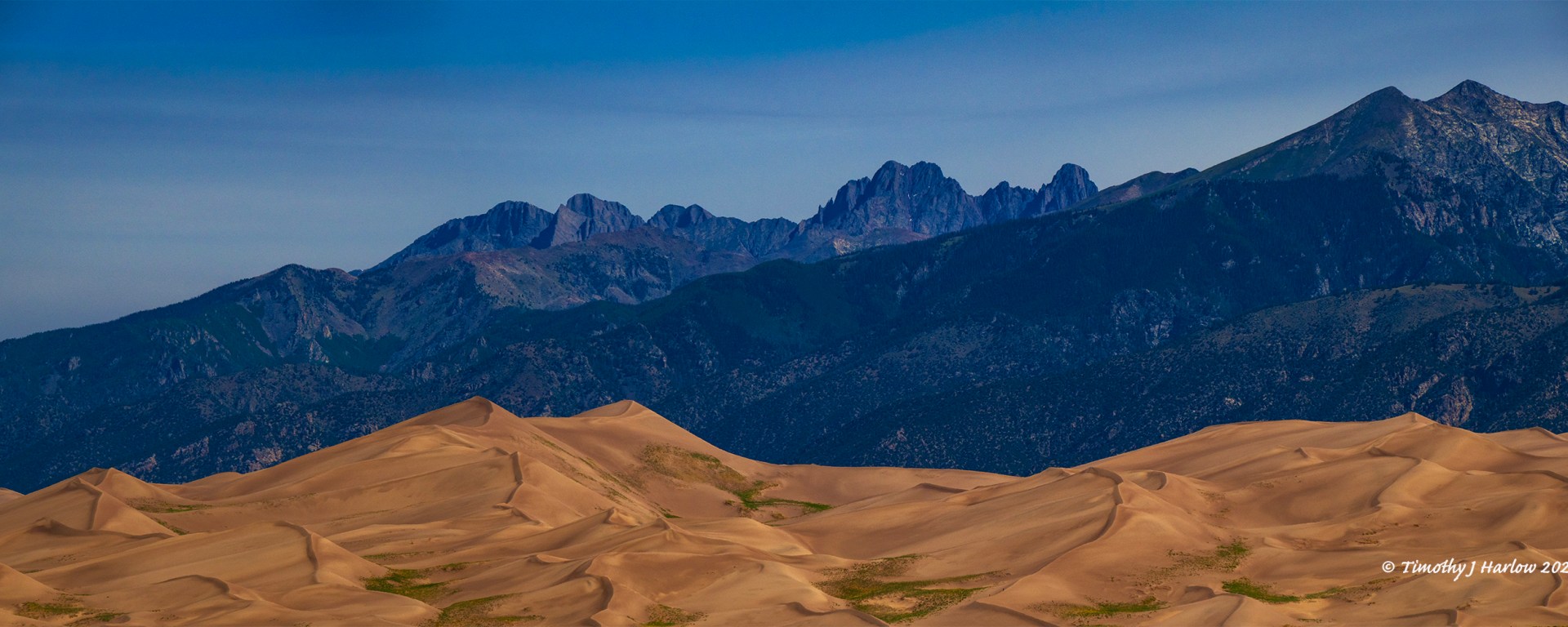
Tucked away in a remote section of central southern Colorado is a geological wonder – the Great Sand Dunes National Park and Preserve.
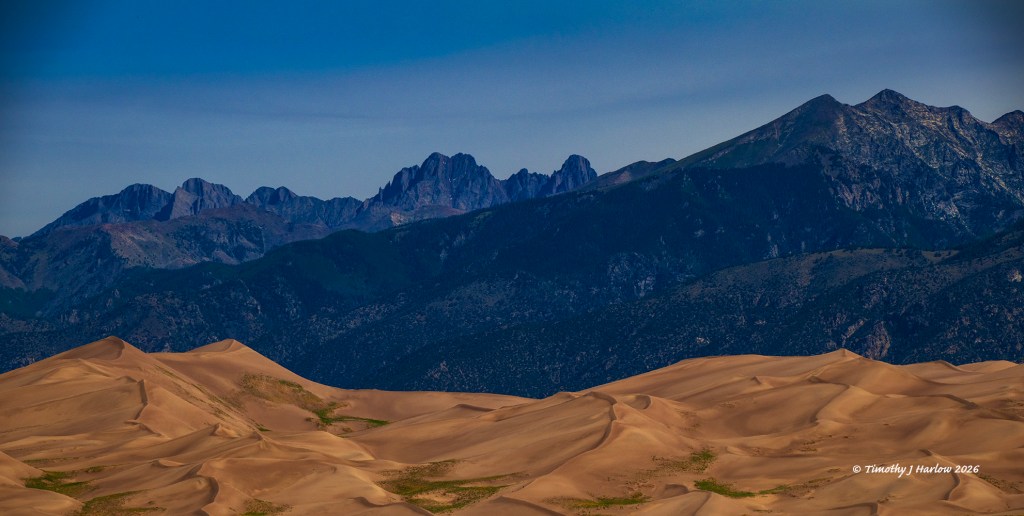
So what is this place? Great Sand Dunes National Park is a vast sand dune system that has been deposited from the erosion of the San Juan and Sangre de Cristo Mountains over many millennia. These dunes move around almost constantly from the ever present winds coming off these mountains. The highest peak in the range is Blanca Peak at 14,351 feet (4374 m) which is a way south of the park. However, Mt. Herard at 13,345 feet (4068 M) and Crestone Peak at 14,266 feet (4348 m) both sit behind the great dunes to the north. They provide an incredible background for these ever changing dunes.
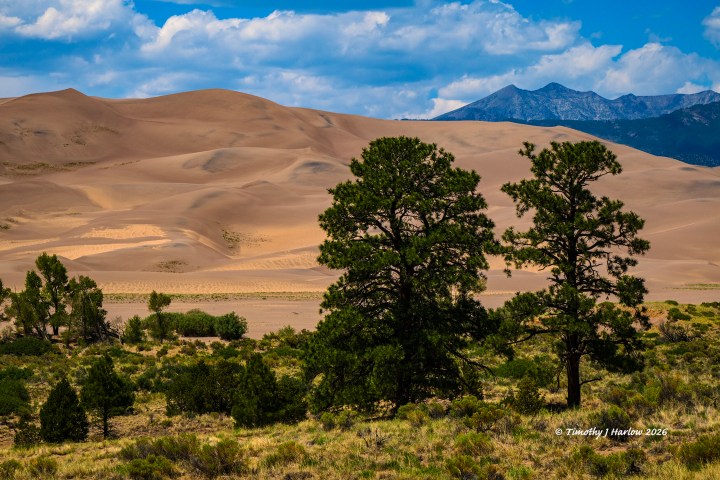
Between 35 million and 15 million years ago massive volcanic eruptions formed the San Juan Mountains west across the basin from where the Great Sand Dunes National Park exists today. In fact some of the largest volcanic eruptions on Earth occurred in what is now the San Juan Mountains of southwestern Colorado. Geologists know much of the sand in these great dunes (the tallest in the United States) was from the San Juan Mountains as 70% of this sand is of volcanic origin. And this volcanic sand is the same age as the San Juan Mountains.
Ancient lakes and streams from the nearby Sangre De Cristo Mountains have carried much of the sand here to be deposited at the base of the Sangre de Cristo Mountains. And today the prevailing western winds keep the sand piled up here. (This information was from the Great Sand Dunes National Park Geology pages.)
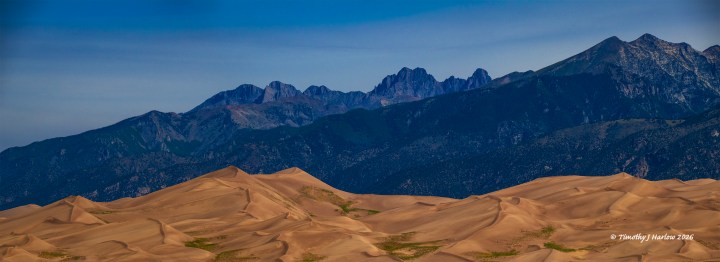
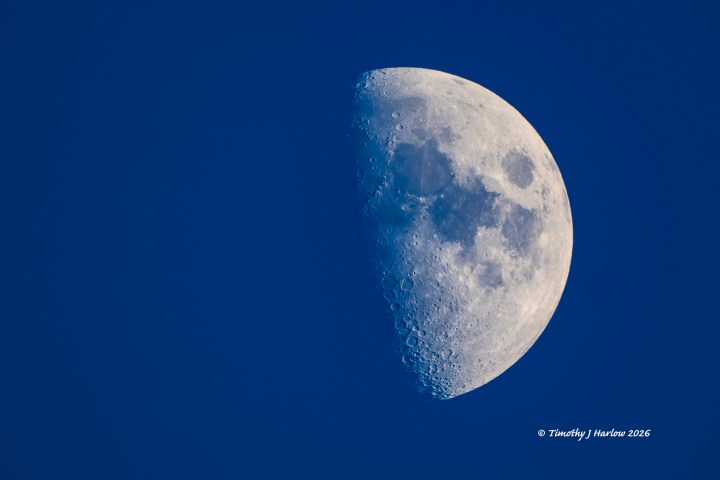
The park is open 24 hours per day every day of the year. It is also an International Dark Sky Park with breathtaking views of the stars and our galaxy. (I did not attempt any star photos here this time as the moon was too bright for those types of photos.) However, my goal for staying overnight was to take some night shots of the dunes with the mountains in the background and some stars in the sky. Those shots just did not work out as it was a bit windy, and I was holding my tripod. That turned out to be a stupid idea as with a 15 second exposure as my minute muscle movements injected some blurriness into all of my shots.
I visited this park last summer with my friend, David, whom I mentioned in my previous post. Last year I hiked a good way up the taller dunes, but this year it was just too hot for me. I had booked a stay at a nearby lodge, the Great Sand Dunes Lodge, which is located just a few miles south of the Park on CO 150. The lodge also has a restaurant and an RV park as well with a couple of fuel pumps in front of the store. The lodge features traditional hotel rooms (quite nice) with patios overlooking the dunes as well as yurt style tents for someone more budget minded. The food at the restaurant was not fancy, but it was really good, and the staff were quite friendly.
If you are into camping the Park has a nice campground (Piñon Flats) where sites can be reserved at www.recreation.gov. These sites fill up fairly quickly in the summer months, so reserve early. Also, large RVs are not going to be accommodated at most of the sites. However, the Great Sand Dunes Lodge does have RV sites with hookups and power to handle larger RVs.

After being at the Park twice in the summers, I would like to come back for a more extended visit in the spring or fall when hiking would be much more comfortable. This year much of southwestern US was in a severe heat wave this early summer, so hiking across that hot sand was just not all that fun.
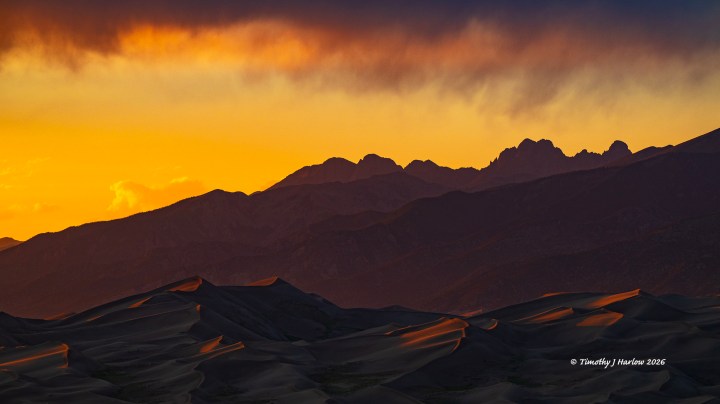
Great Sand Dunes National Park features much more than just sand. The Park includes a wide array of wildlife from salamanders, frogs and toads to deer, elk, bobcats, cougars, bears, marmots, chipmunks and bats. There are mountain hikes and wetlands as well. So yes, I really want to plan a more extended trip to the Dunes in the later fall or early spring.
I hope you have enjoyed this post about a lesser known National Park in southern Colorado. Great Sand Dunes National Park is quite remote, so some advance planning should help make sure you enjoy your time there.
Thanks for visiting my blog, and have fun out there!


Moods indeed! It’s one thing to capture landscapes, and quite another to capture their essence. Well done, as always, Tim.
P.S. Just wanted to let you know why I recently took you out of the notification loop. My email inbox fills up with nearly 1,000 notices every day, so I have to limit it to notifications from those who visit regularly. Good to see you back again, and thank you for being understanding!
LikeLiked by 1 person
Not a problem! Over 1000 notices daily! When do you sleep?
LikeLiked by 1 person
While I’m typing. ;>)
LikeLiked by 1 person