

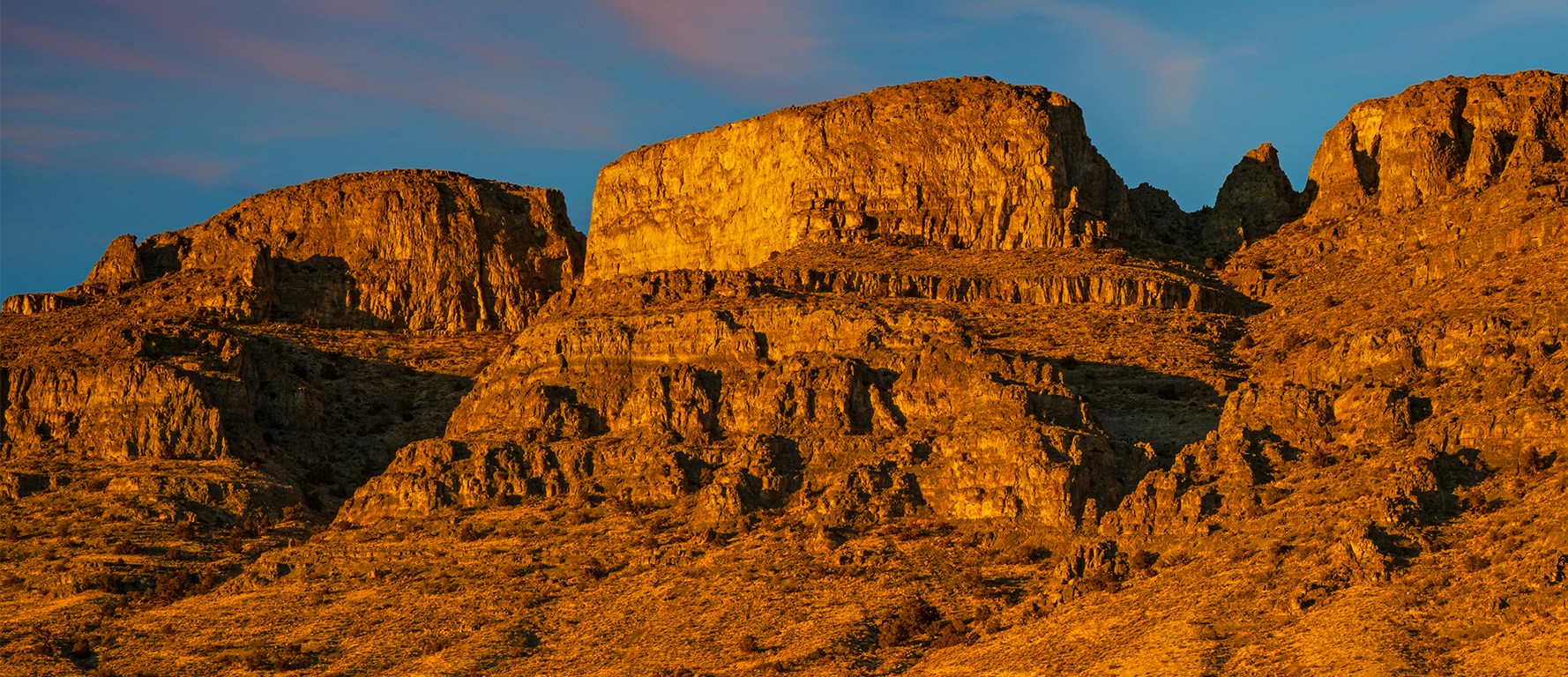
Once again work is getting in the way of hobbies, but I did manage to get away in mid January to spend a couple of days out in the far west desert of Utah near the Nevada border. If you saw my last post, Remembering Topaz, you know I had driven down to Delta, Utah to scout out a remote camping spot away from any light pollution.
After that trip I decided to continue west on US 50 past Delta toward Nevada. About 50 miles or so (80 km) west of Delta are two interesting geological features – Notch Peak and Sevier Lake. Notch Peak is a very remote mountain peak with a distinctive face in the House Range, and Sevier Lake is a mostly dry lake bed in the far west desert of Utah.
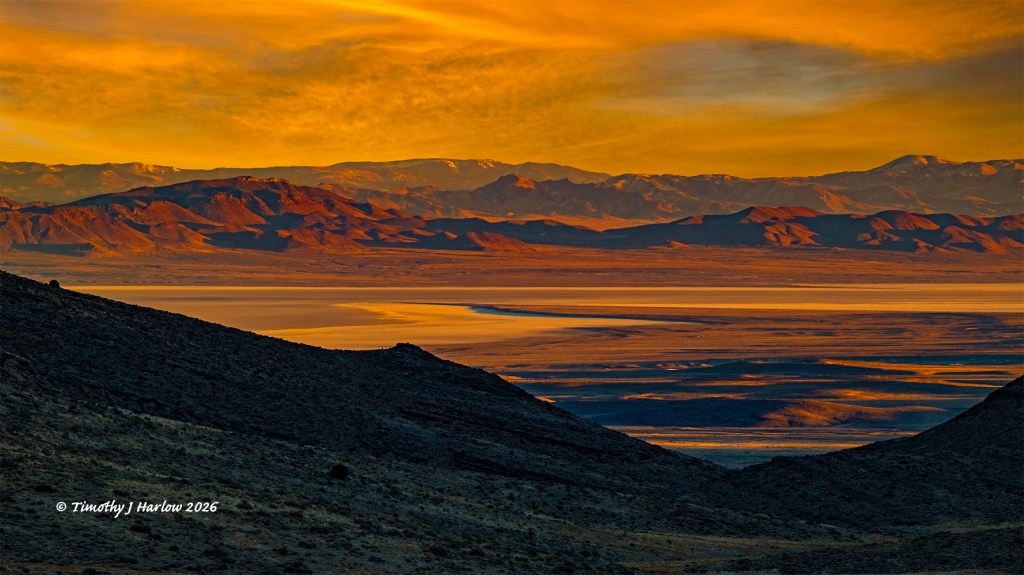
If you have been following me for awhile, or are familiar with the western US, you may know that this area in the Great Basin has no water outlets – i.e. rivers do not flow out to any ocean. So Sevier Lake is similar to the Great Salt Lake – water only flows into it and then eventually evaporates.
This part of the Great Basin is extremely remote. After Delta, no towns or services exist along US 50 (known as the loneliest road in America) until you reach a tiny town called Baker just past the Nevada border. My goals were to find a secluded camping spot away from everyone, take some star photos and do some hiking. Seclusion ended up being quite easy this time of year. I didn’t see another human until; I got back on US 50 on Sunday. The timing was good – no moon and clear skies. January had been very dry and sometimes cold and sometimes not so cold (weird winter), so the desert roads were dry and fairly easy to traverse.
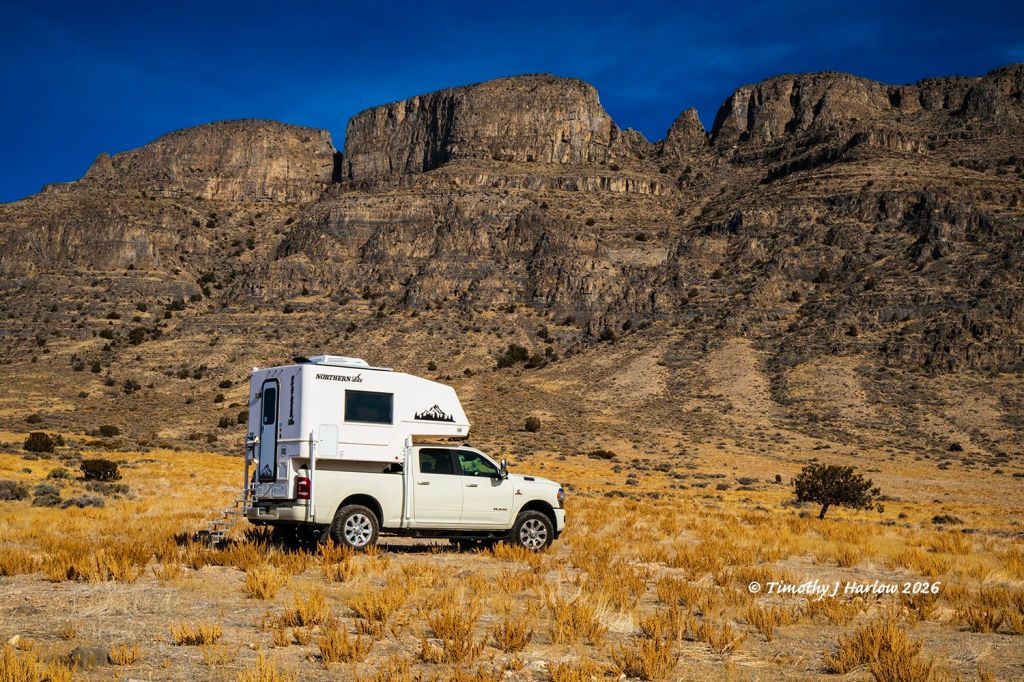
I found a dirt trail on the west side of Notch Peak, and put the truck in 4 wheel drive. The road, really more of a two track trail, wound generally northward from US 50. About 8 miles in I found a relatively flat spot to spend the afternoon and night.
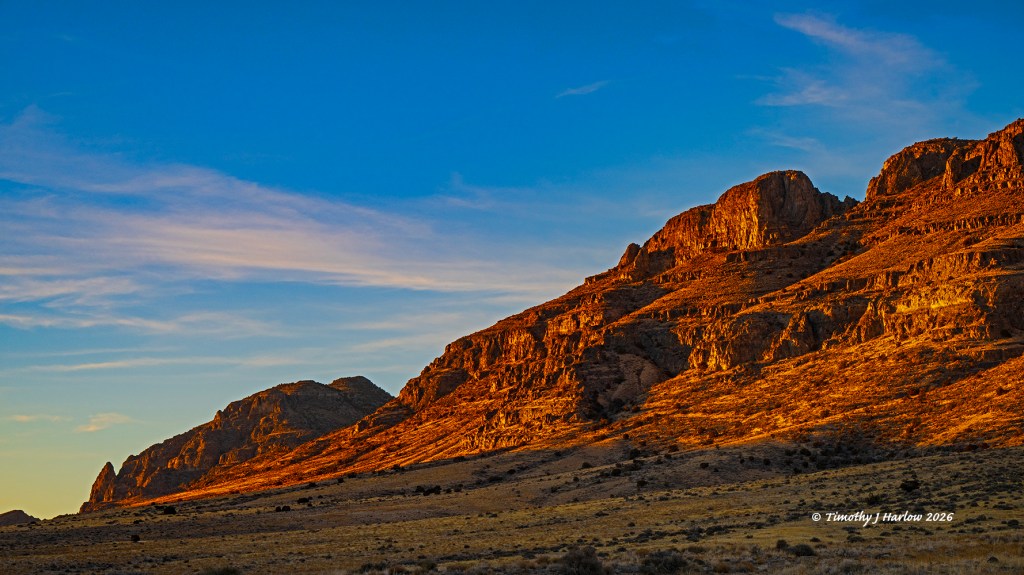
I spent the afternoon getting the camper setup, and then scouting around for some photos. After the sunset photos, I returned to the camper and made dinner. Later that night I went out into the very cold darkness to try some star shots.
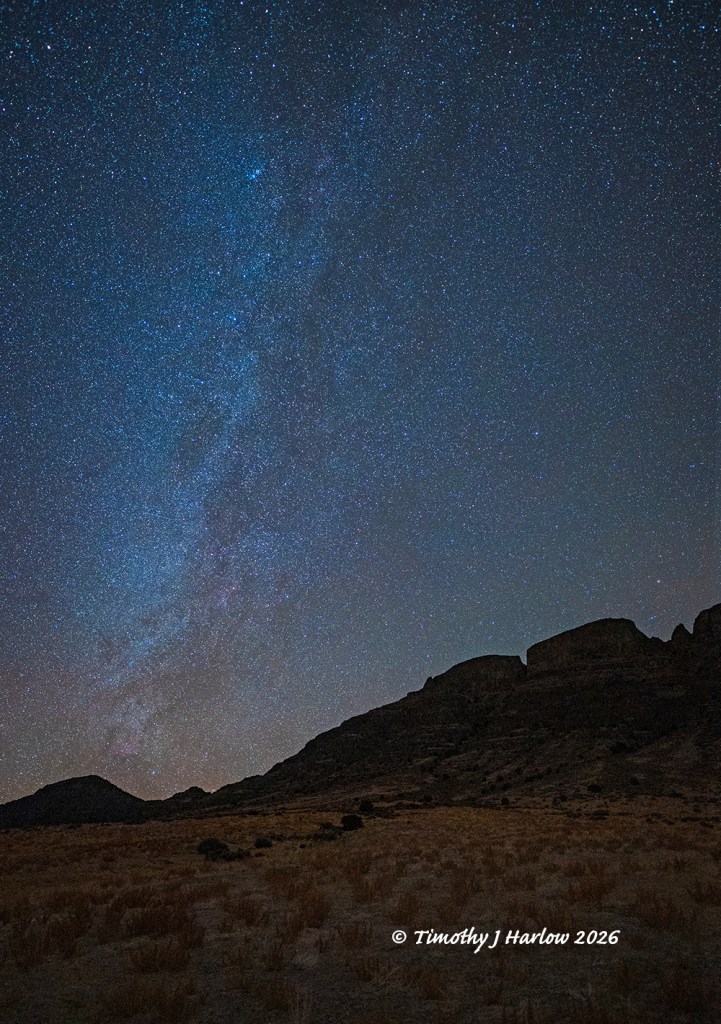
It was cold! The first night I went out I had on my long underwear with a heavy down coat and a wool hat under my hood. By the end of my shooting session I was a bit chilly.
I wasn’t really happy with the camping spot, so the next morning I drove up the trail farther. The trail got more rough and rugged, so I ended up in 4 wheel low to keep the speed slow with the camper on the truck, especially while crossing some dry creek beds. After a few more miles I found a more remote spot farther off of the trail, and set up camp again.
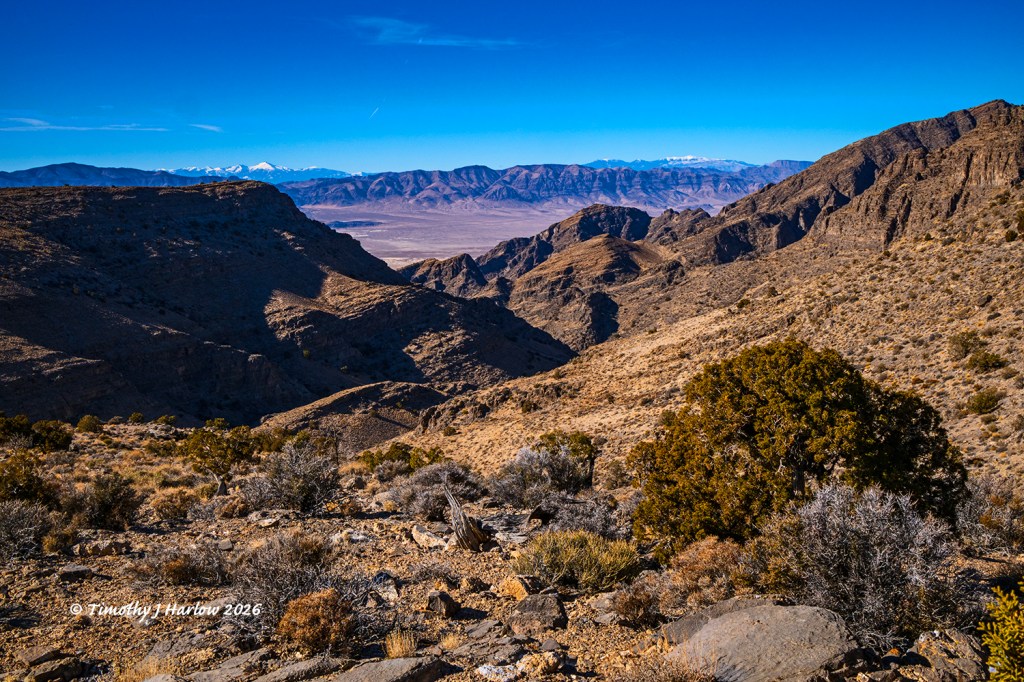
After getting things set up again, I decided it was time for a good hike. So, I set off in the general direction of the far end of the Notch Peak mastiff. There was no trail as I was just cutting across country generally heading upward toward the base of the mountain at the northern end.
The terrain got more rugged and I crossed a couple of ancient lava flows. Then when I crested a large ridge, I got a big surprise. There was a really big gorge between me and the end of the mountain. But the views to the north were spectacular!
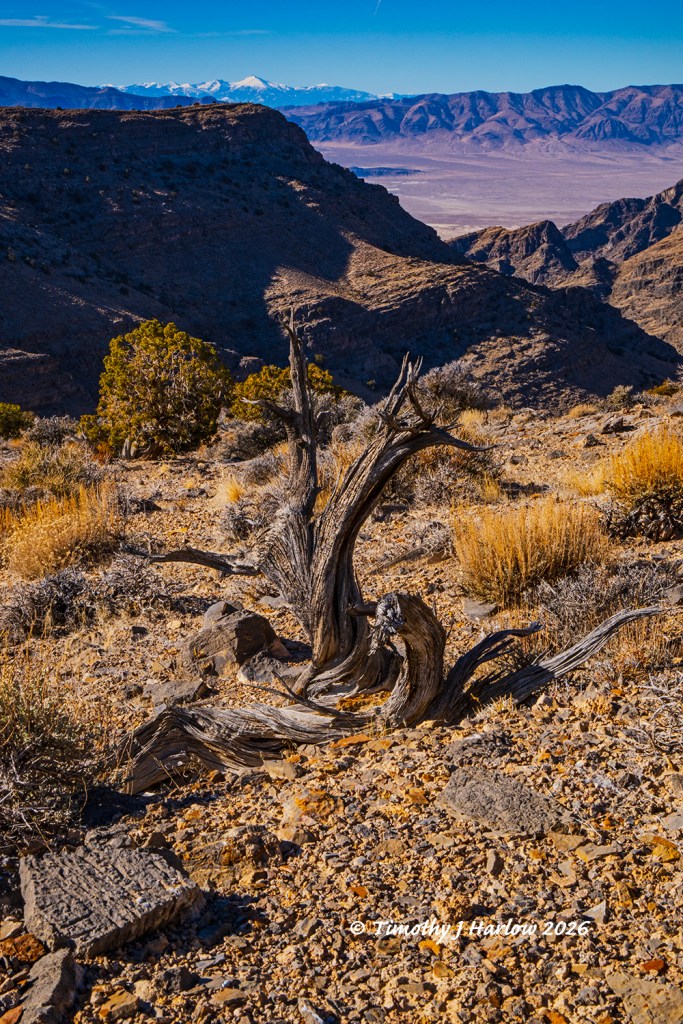
The desert terrain is really interesting. This part of Utah is extremely desolate yet beautiful in its own way. At first glance the western desert in the Great Basin appears nearly lifeless. But while this area is indeed harsh and unforgiving, it is full of life. The old juniper bushes and trees can take really cool shapes. There are numerous grasses and flowering plants too. I found some nice healthy cactus, and there were creature holes everywhere. Some of the holes were probably from gophers, prairie dogs or snakes. But there were some quite large diameter holes, likely boroughs, perhaps belonging to coyotes or more likely badgers. I didn’t stick my head down any holes to find out! 🤣 Being winter, I didn’t even see very many birds out here.
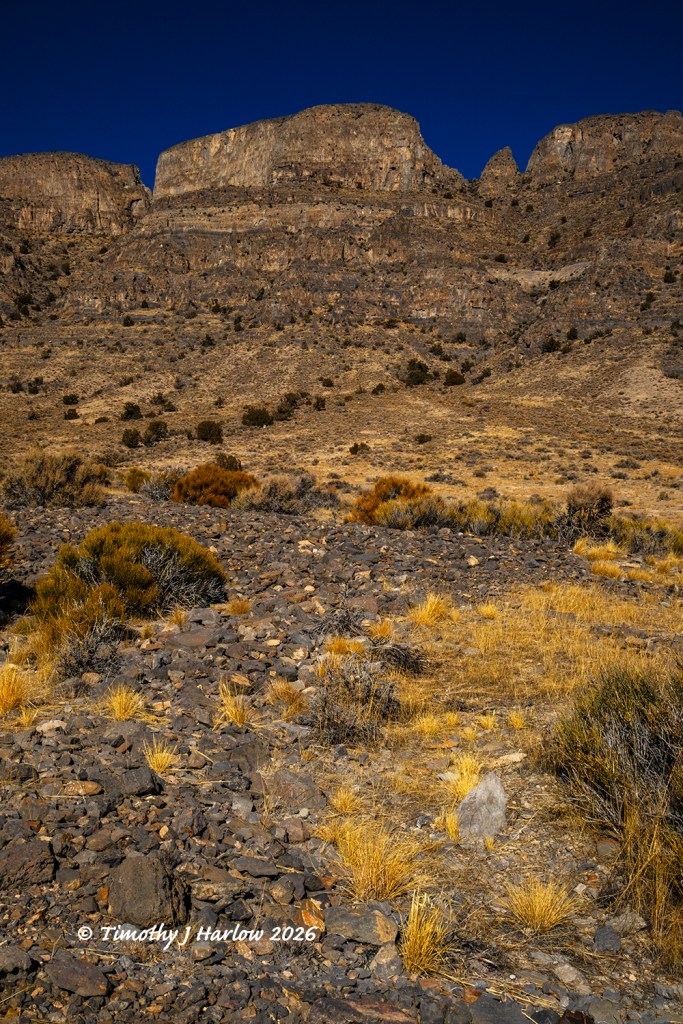
This is the Great Basin; a seemingly endless landscape of mountains and more barren basins (valleys). And yet each valley and each mountain are different. This area is rich with ancient lava flows and old volcanic remains. In the Great Basin the Earth’s crust has been stretched thin, so magma found lots of places to escape.
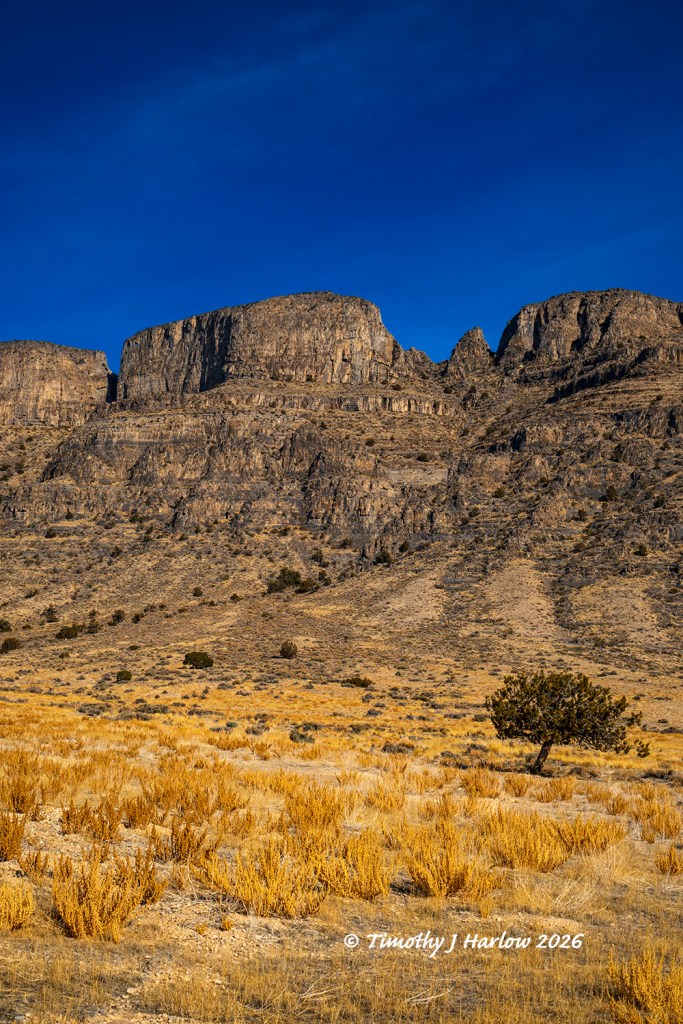
Before I left the Salt Lake metro area that Friday morning, the area had been experiencing some seriously bad air quality. In fact, a few days in January Salt Lake City had the worst air quality in the nation. Part of this is due to the geography of the area. These basins tend to cause temperature inversions in the winter as the colder, heavier air flows down from the mountains and settles into the valleys. That trends to trap the pollution in the valleys.
But out here, more than 150 miles (241 km) from the city, the air is much more clear. Now, that being said, the air is still fairly hazy here compared to say the far north in Churchill, Manitoba.
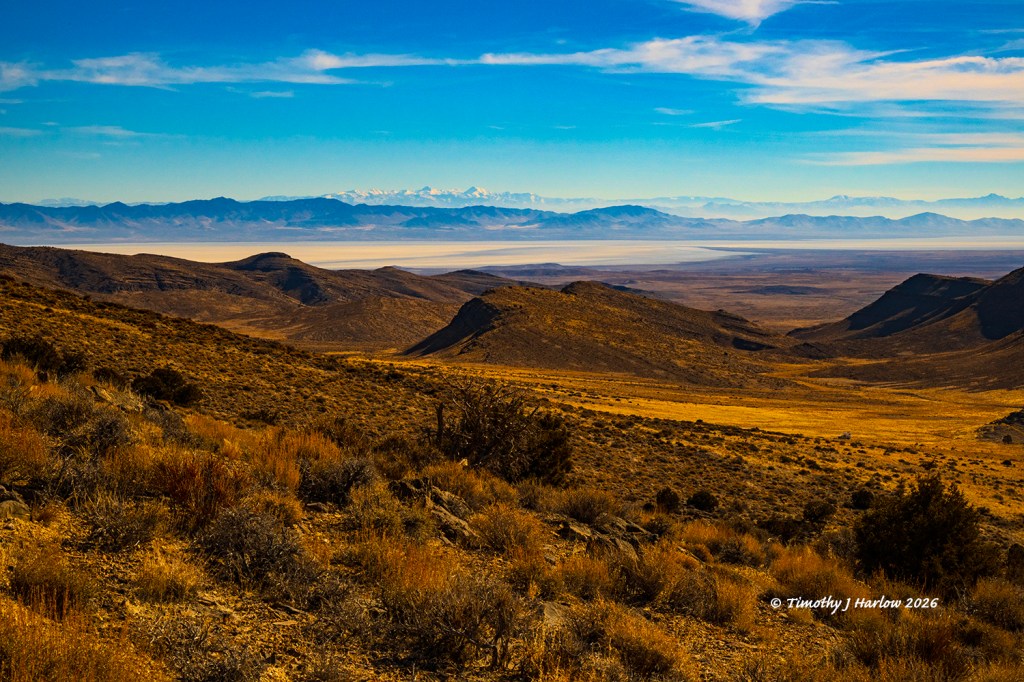
Well, after cleaning up a bit from the hike, I setup to catch the sunset on Notch Peak. Here is what I saw.
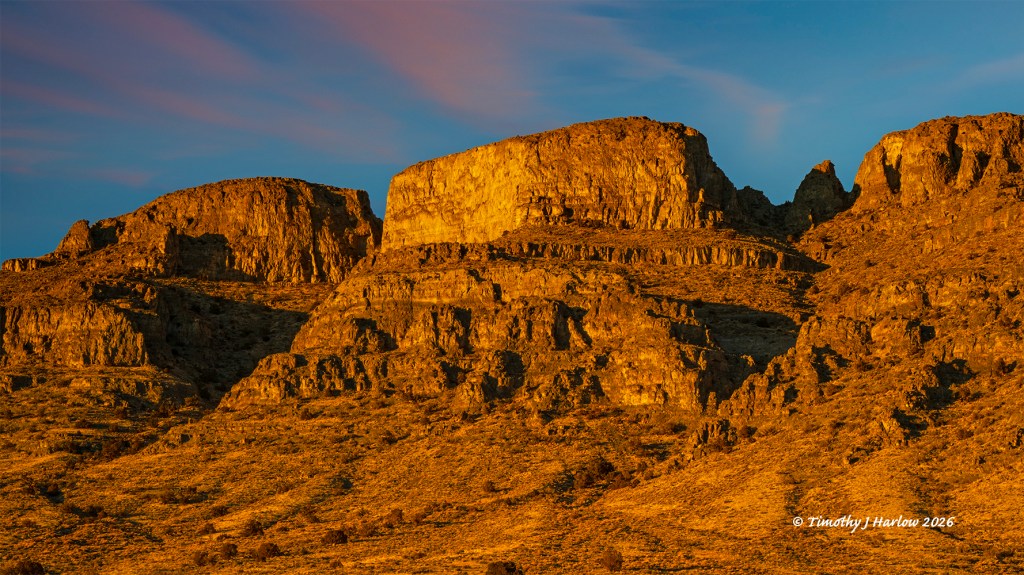
I was getting pretty hungry after the day of hiking, so dinner was in order. After dinner, I spent some time reading then watched a movie on my laptop. As the evening grew later and darker, I got ready for the night’s star photographs.
Even during the day, the temperature was chilly, in the low 40s F (maybe around 6° C). So, this time I not only put on my long underwear, but I put on my snow pants for an extra layer. About 9:30 pm I went out to try more photos. It was really cold, in the low teens Fahrenheit (about -11° C).
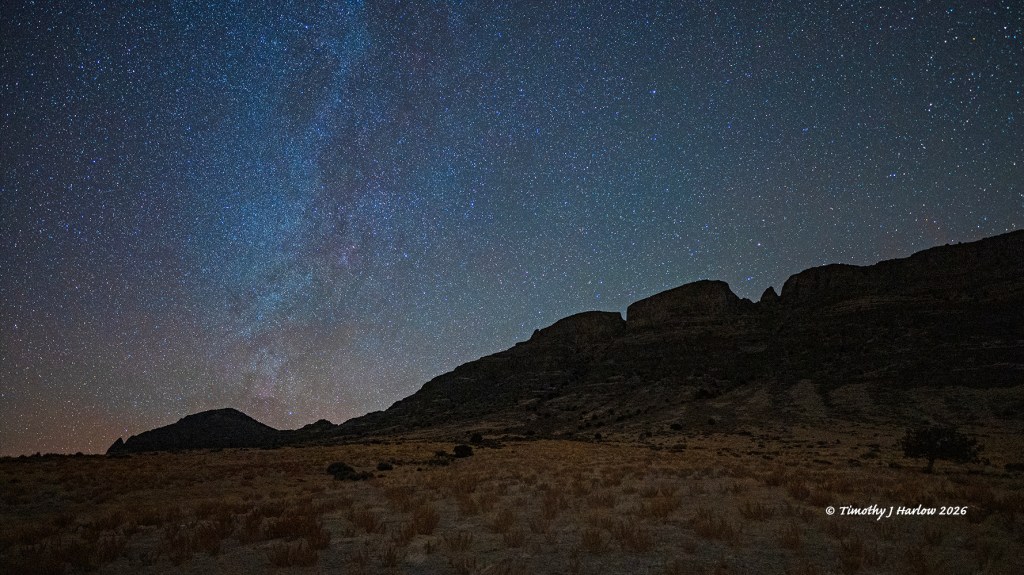
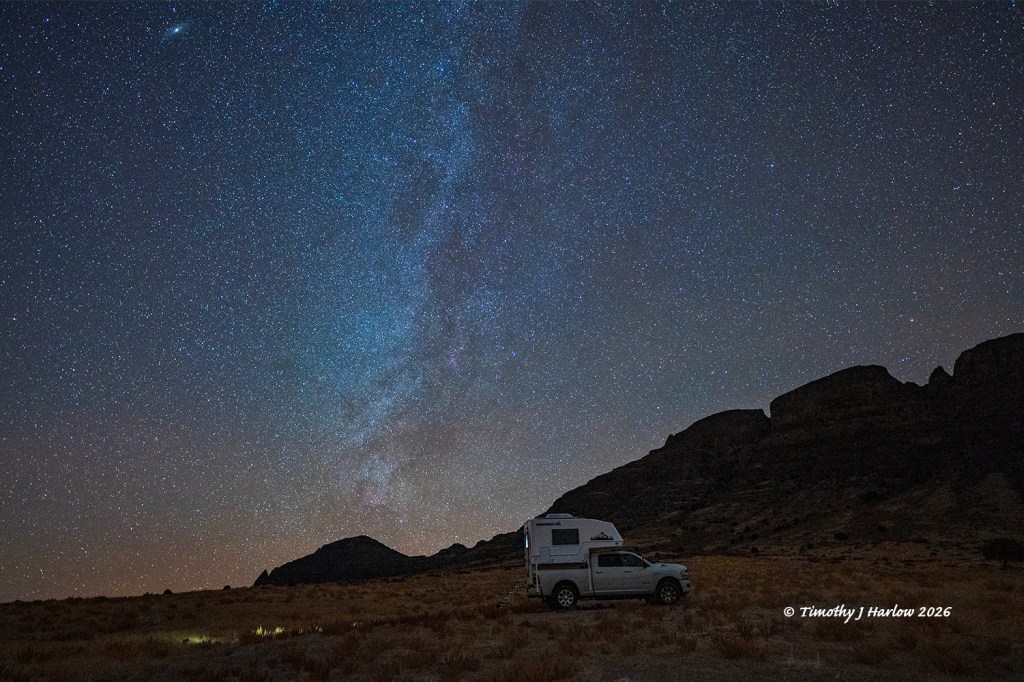
For each individual star photograph, I was using an exposure of between 13 and 15 seconds. Before each photo was taken, I had set my self-timer to a 10 second delay to eliminate any camera vibration from pressing the shutter release. Star photography is quite interesting because as the earth rotates on its axis, it makes the stars appear to move in the sky. Thus you need an exposure short enough to keep those stars sharp, yet long enough to capture much of what we cannot see with our eyes.
So, that’s why I use the 20mm f1.8 lens. the short focal length allows for longer exposures without getting star movement, and the small f stop number means the lens can let in a lot of light to see more details.
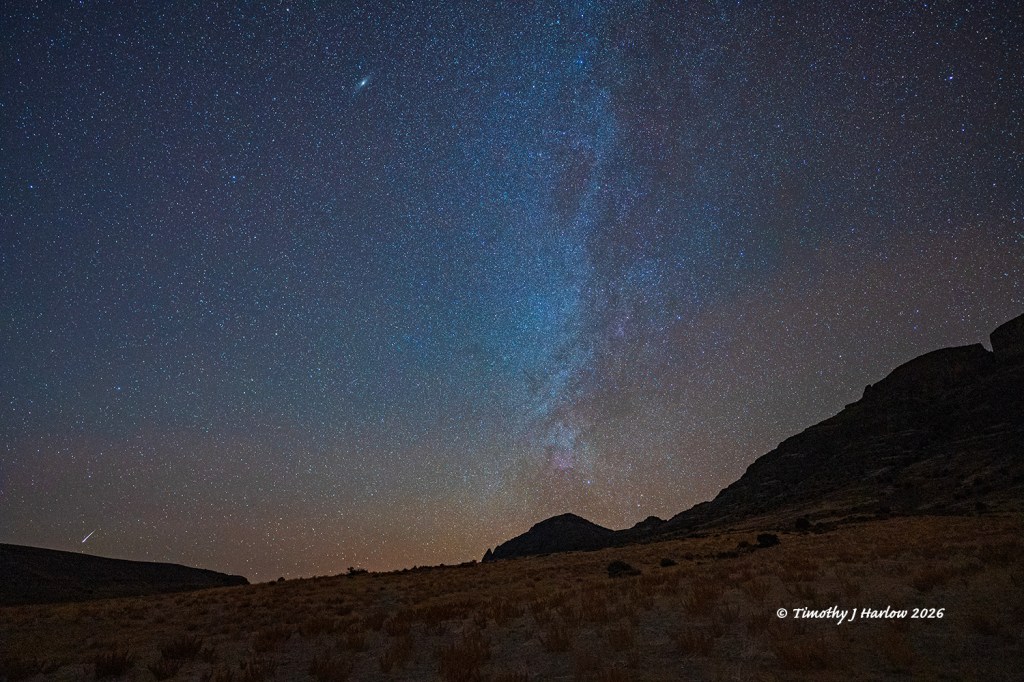
And sometimes a jet would fly over right into my photo, ruining the shot. And for the photos I have shown in this post, each one is actually composed of four individual shots stacked upon one another. So, for the four star photographs here, I spent well over and hour outside for the whole process.
But the cold weather gear worked perfectly. I stayed nice and warm this night, but I was happy to get back inside, and hit the bed.
The next morning, I got ready to leave and head back to the real world. This place was so wonderful and peaceful that it was hard to leave. But alas, family and work were awaiting my return.
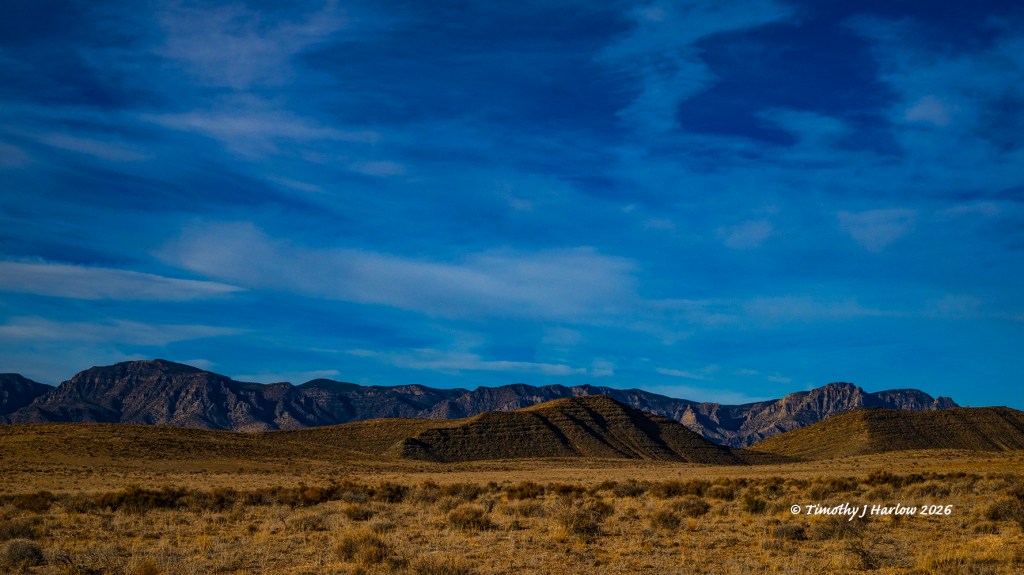
Nature is such a wonderful refresher. I left feeling happy and relaxed. So, I really hope you have enjoyed this virtual tour of the western Utah desert with Notch Peak and the Sevier Lake basin.
With everything going on in the world, go outside, and enjoy what nature has given us. It is truly good for our souls.
Thanks for visiting my blog!


 Tim's Viewpoints & Visuals
Looks like an incredible place for taking photos Tim.
LikeLiked by 1 person
It is a cool area.
LikeLike
Wow! Great photos!
LikeLiked by 1 person
Thanks MB! Hope the books are coming along.
LikeLike