

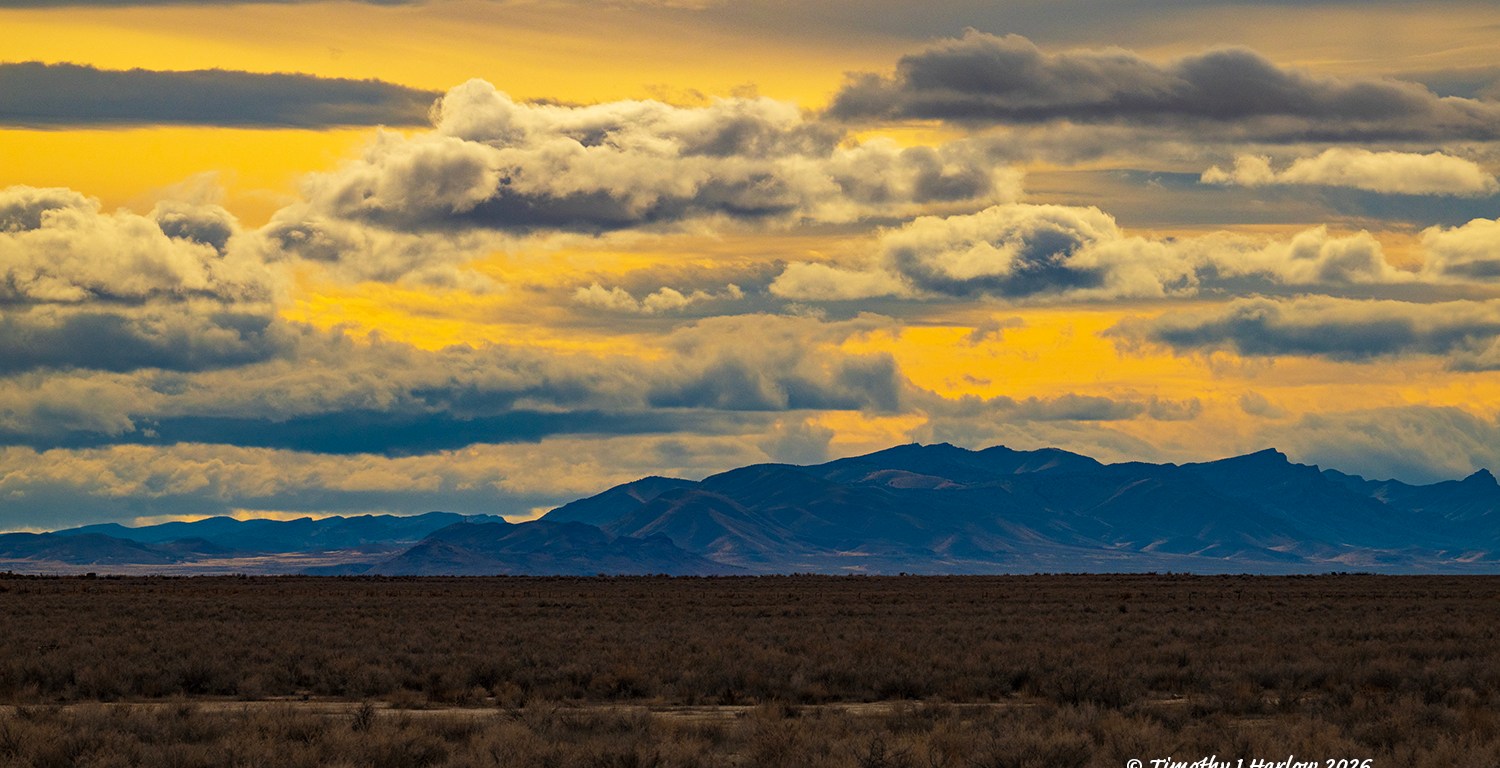
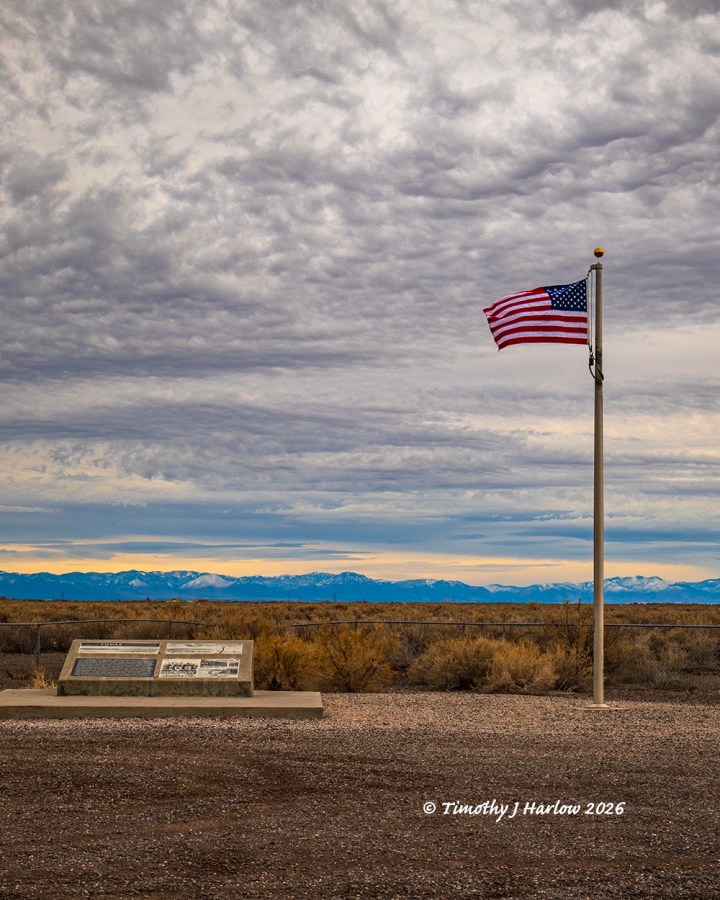
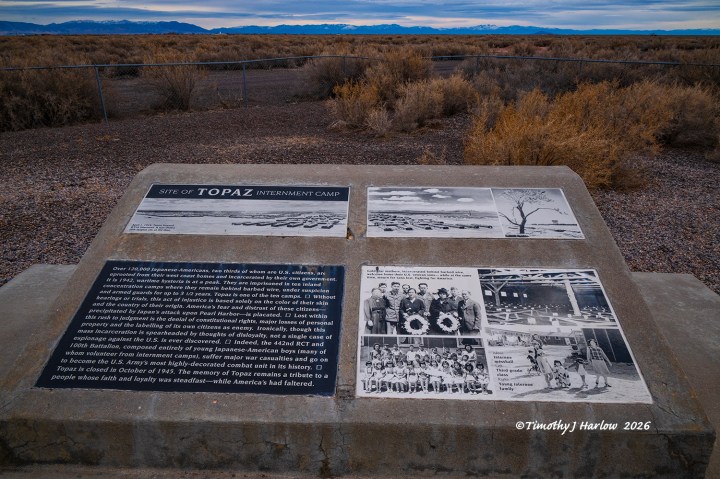
Several years ago I drove out to Delta, Utah to visit the Topaz World War II Japanese Internment Camp. Over the weekend I made another trip down to Delta to scout out some possible camp sites for some winter desert photography. While I was in the area, I decided to drive over to the Topaz Internment Camp Site to see what had changed.
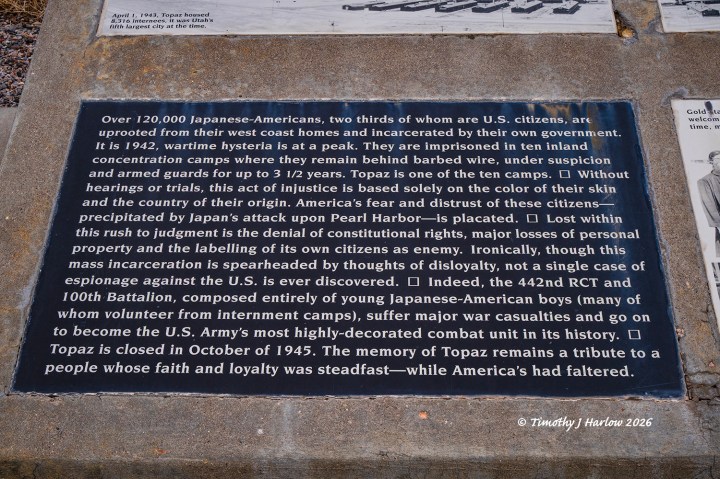
For those of you who are not familiar with this part of the United States’ history, let me explain what Topaz was and why it should still be important. Shortly after the Japanese bombed Pearl Harbor on December 7, 1941 bringing the US into World War II, sentiments were brewing in our government that the many citizens of Japanese ancestry living near the west coast may be disloyal and decide to help the Japanese government.
Now many of these Japanese ancestry citizens were born here (in the US), and some were second or third or more generations removed from their immigrant relatives. There was not evidence at the time of any Japanese heritage citizens espionage, and to date none has been uncovered. Yet the prejudice and fear was running rampant in the US, especially among federal government officials.
So, in 1942 the United States government, under an order from President Franklin Roosevelt, rounded up over 120,000 US citizens of Japanese descent that were living in the western US, and imprisoned them in 10 internment camps across the interior of the country. One of those camps was right here in Utah, about 10 miles northwest of the town of Delta.
Now, these US citizens were taken away from their homes, their businesses, and their schools. They were not compensated for anything – not the loss of their homes, their businesses or even their personal property. These citizens were ordered to report to collection points by a certain date, and then put on trains and shipped to these camps with only a bare minimum of possessions, mostly the clothes that they could carry with them.
These Japanese Americans were teachers, plumbers, mechanics, accountants, lawyers, college professors, chemists, etc. Some were small business owners like myself. Entire families were shipped off – the men, the women and the children. They were all taken away, and they lost everything!
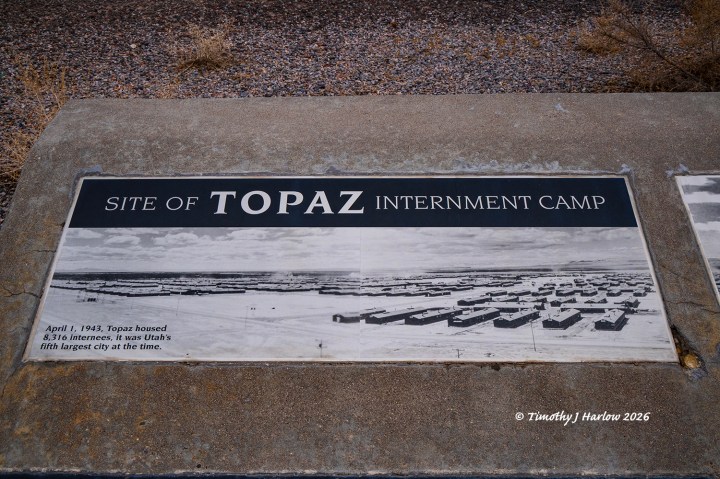
If you go back to that post, Interned, you’ll learn about the horrendous living conditions in Topaz and the other camps. This part of Utah is extremely desolate and isolated. It’s a two hour drive to Delta from my house on today’s roads and vehicles. This is desert. It’s brutally cold in the winters. When I was at Topaz in late December of 2016, it was in the low teens Fahrenheit ( well below zero Celsius) and quite windy. The barracks were simply wood framed plywood with tar paper type roofs. The wind poured though these buildings. They had no insulation. In the summers in this part of the intermountain west, temperatures commonly reach over 100° F (38° and above C). There is very little shade.

If you are ever in the Delta, Utah area, I highly recommend visiting the Topaz Museum that’s right on the main street in downtown Delta. The museum has a replica of a barrack building along with tons of artifacts, stories and arts and crafts that were made by the internees. It’s very reasonably priced and well worth an afternoon or morning. But take some time to drive out to the actual internment camp site to really get a feel for what these people endured.
So, what is the point of this post? The world should be aware of what the United States did to it’s own citizens and aware of the horrors that racism and bigotry can unleash. We must never forget what happened to our Japanese heritage citizens.
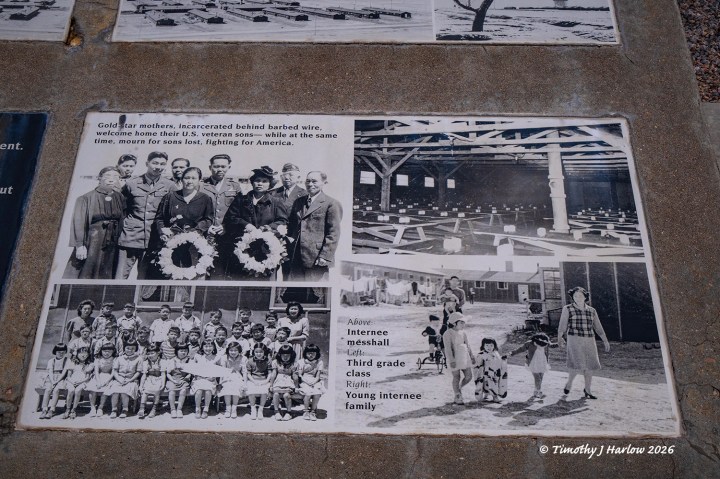
This camp and this bit of history is very personal to me. Some of my best friends and neighbors while growing up in El Paso, Texas were of Japanese ancestry. These kids’ parents were both interned during World War II. My friends’ mother was a dear friend of my Mom; their Dad was my Dad’s best friend. They were wonderful people. So when I visit Topaz, I think about Grace and Frank, the parents. I think about the awful treatment and conditions they endured simply because they had Japanese ancestors. George Takei, Sulu of Star Trek fame, was an internee. He has an excellent book about his experiences – “My Lost Freedom: A Japanese American World War II Story”. (This book is geared toward children, but I have read it. It is really well done. It presents a detailed picture of what life was like for George in the camp.) Unfortunately, this book is now banned in Tennessee.
With what is now happening here in the US – ICE grabbing people off our streets with force and sending these people off to unknown locations without due process of law – supposedly guaranteed to all people on US soil – not just citizens – by our Constitution, with our president putting active duty troops in our cities – again against our laws, and with the massive racism and hatred against people of color here, I really feel that we need reminders as to why we should no longer tolerate this bigotry, racism and hatred. No good ever comes from this.
And now as I write this, the United States military under direct orders from Trump has invaded, bombed and blockaded a neighboring country, Venezuela, under the pretext of bring it’s dictator/drug lord president to the US for trial. Now Maduro is an awful guy, but Trump just pardoned the prior leader of Honduras who had been serving time in US prison for the exact type of crimes. And now our president says that we will keep all of Venezuela’s oil (or at least the money from it), and that the US will run Venezuela. Trump is now threatening to take our neighbor to the north, Greenland, by force for our “national security”.
This is why I decided to write this post. The world needs to understand that the current government of the United States is evil, corrupt and taking the planet down the exact same course that Hitler did in the 1930s. And we all know how that worked out – millions around the world died.
There is no place in our modern society for racism, bigotry and hatred. And maybe if just one person can learn from this little bit of history it will help others.
Thank you so much for your time to read this post, and for following my blog. Have fun out there, and Happy New Year to you all!


 Tim's Viewpoints & Visuals
🙏
You make the road by walking it.
Ben Macri
LikeLike