

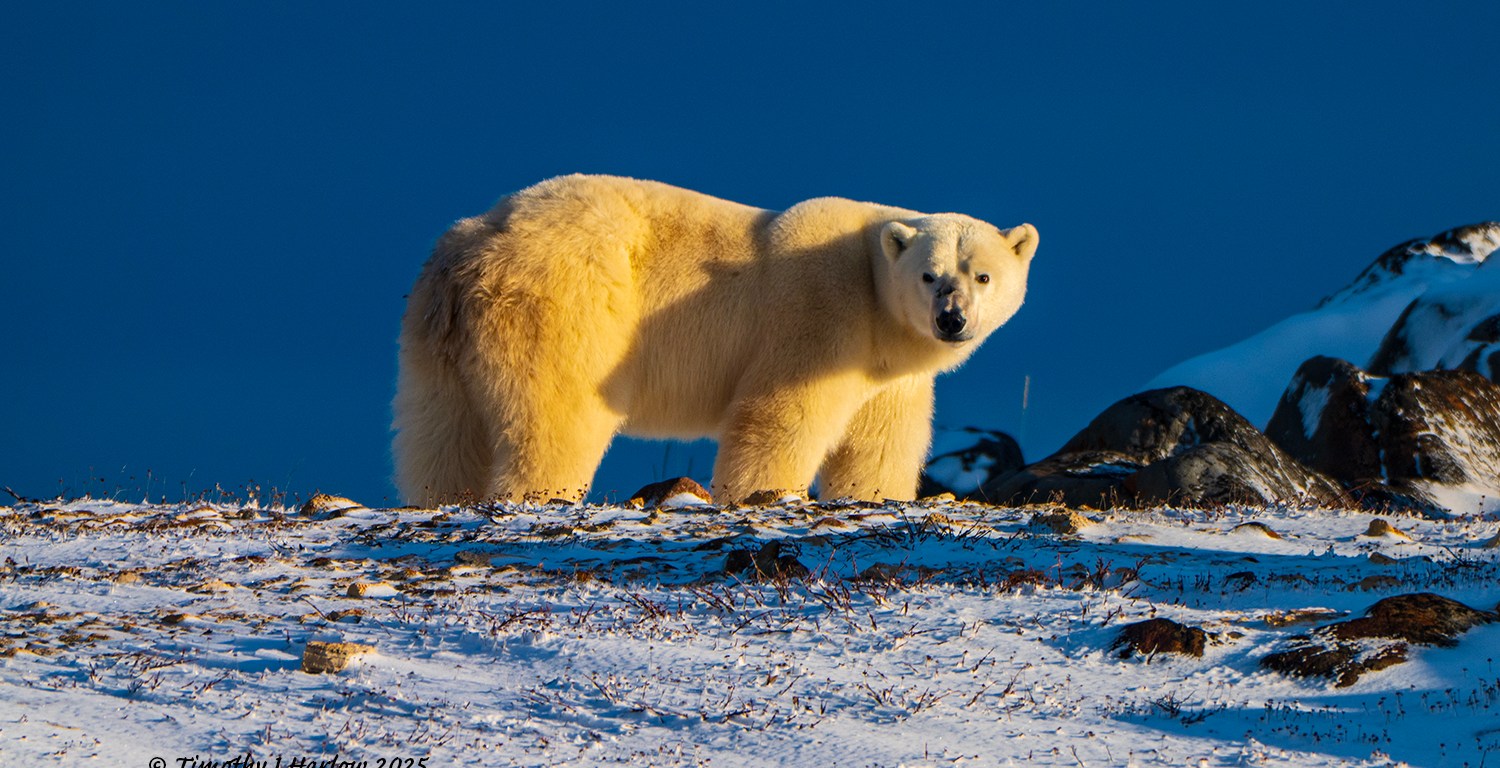
Part I
Last Christmas my wife, Sheri, gave me an incredible present – a photographic guided tour of the polar bears in Churchill, Manitoba, Canada! I was totally blown away – I have never been on this type of an adventure. The arctic has always fascinated me, and I have wanted to go to Churchill for quite some time to see the polar bears.

Why Churchill, Manitoba? Churchill lies on the northwestern edge of Hudson Bay, and is on a major migration route for polar bears (Ursus maritimus). Every late spring when the sea ice on Hudson Bay begins to melt, the bears move off of the bay and into the areas near Churchill. And as winter begins to approach again, the bears migrate through the general Churchill region to be near the bay when it freezes over. Remember that Hudson Bay is part of the north Atlantic Ocean, so it takes quite cold temperatures to freeze the salt water.
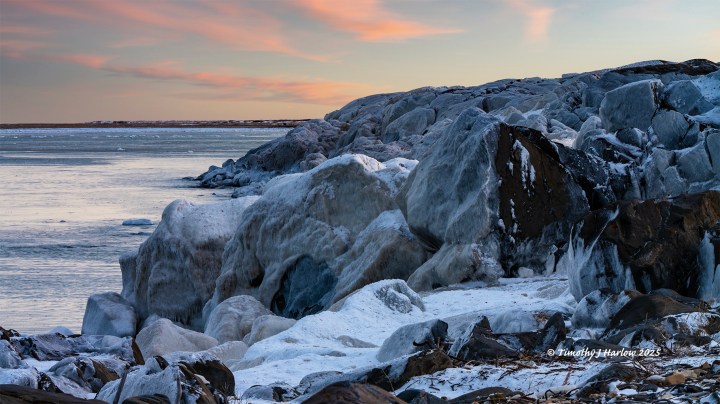
The trip was scheduled for November 7 through November 14 with the Wild Outdoors Photography group, headed by Michael Bertelsen. Michael, his wife, Julia, and his son, Erik, run these tours every October and November from Churchill, Manitoba. The tour is not some giant tundra buggy 10 feet above the ground – no you are on the ground, out of the vehicles with the polar bears. For 7 days you are outside most of the day, experiencing these magnificent creatures right in their own environment!
So how did this come about? I’ll keep the story short. As I said earlier, I have always been fascinated with the arctic. So several years ago when we were at the Canadian Arabian Horse National Championship show in Brandon, Manitoba, I asked our waitress in Brandon if she was a local resident. She said she was, so I asked her how long it would take to drive up to Churchill from Brandon to see the polar bears. After a very perplexed look, she replies, “Honey, you can’t drive there.” I said why not, and she replied that there were no roads. The only way to get to Churchill is via airplane or a train, that sometimes doesn’t run in the summers when the permafrost melts and the tracks sag into the bogs.

Now I thought I had done my homework as Churchill is only about 678 miles (1091 km) north of Brandon, so I figured about a day and a half driving. After she finished laughing, she just said that Churchill was extremely remote and that there was again no way to drive there. And then another waitress overheard our conversation, and she came over to our table. She said something about how dangerous the bears were, and that her uncle had been the mayor in Churchill many years ago and had his arm ripped off by a polar bear. That struck me, but I still wanted to go; it was just going to take more planning than I had originally thought.

So, 14 years later my wonderful wife springs this surprise on my in the form of a polar bear calendar and a book about the arctic. I was totally floored, surprised, overwhelmed, everything! The next 11 months I spent preparing for the trip – getting new winter clothing (some of mine was 30 plus years old), a new camera lens – a Nikon Z 180-600 mm zoom and more.
What a trip! I absolutely had a blast! Michael Bertelsen, Julia and Erik were totally wonderful. Not only is Mike an incredible photographer, but he and his family are really knowledgeable about the bears, the area, their habitat, their lifestyle, everything. They are also extremely respectful of the bears and their habitat. They made sure we were always safe, but they also were very careful to make sure we were not interfering in the bears’ routines.
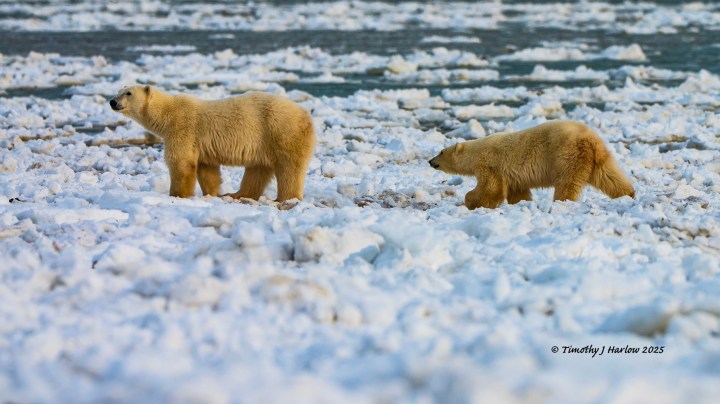
So, let’s talk about those polar bears for a few minutes. They are big! A fully grown male bear can weigh as much as 1760 pounds (800 kg), and can stand a bit over 12 feet (3.66 meters) tall on their hind legs! They can run at 25 mph (about 40 kph), so outrunning one is not really an option.
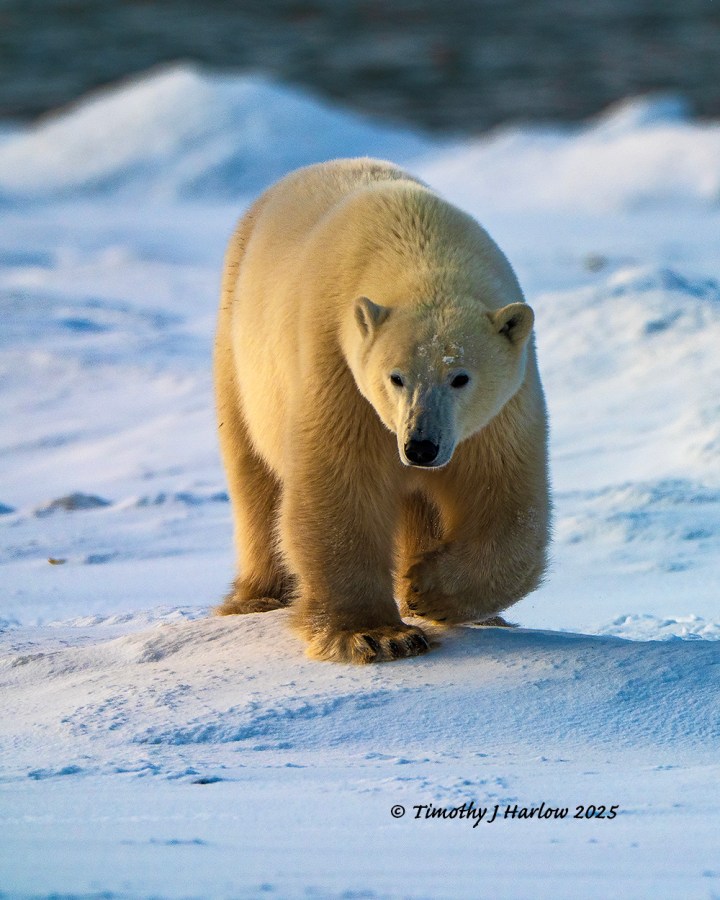
By early November these polar bears had been off of the ice for over 140 days, so they were getting really hungry. Polar bears can live about 180 days without their prime food supply – seals, but after that things get pretty iffy for them. They don’t really hunt many land animals like caribou, rabbits, fox, etc. They are primarily evolved to eat the high fat seals and things. Climate change is really taking a toll on the bears as it’s taking longer for the seas to freeze over now. Michael thinks it’s possible that the last cubs born in the Churchill area may be in about 10 years or less due to the rate at which Hudson Bay is freezing later each year.
Before I get into the photographic experience, here is a bit of history on Churchill. The area has been inhabited by various nomadic arctic peoples for nearly two thousand years. The earliest people were the Dene and Thule people, ancestors of the present day Inuit.
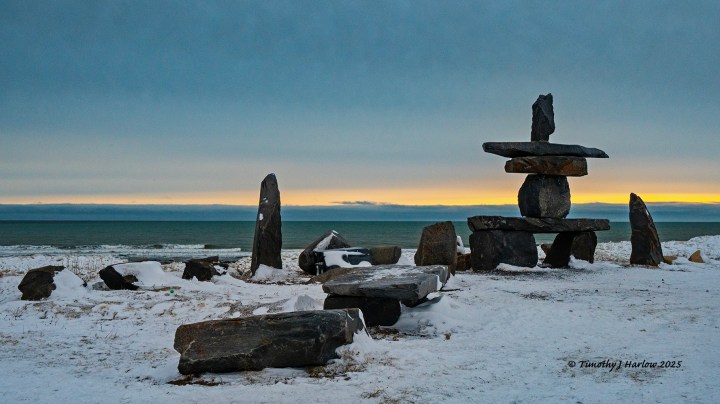
The first Europeans came in 1619 from Denmark, but only 3 of the 64 expedition members survived that first winter. In 1717, the Hudson Bay Company built the first permanent European settlement, Fort Churchill, near the mouth of the Churchill River – where the town is presently located. Prior to the first Europeans, the area has been settled by the Cree and Chipewyan peoples. In World War II, the US Army established a base near the town, and after the war the area was used by joint US and Canadian forces as part of the Strategic Air Command. Part of the old military base is now the commercial Churchill airport.

Our daily routine was up early for breakfast at the guest house, and then we were packed and into the vans each morning around 8 am as the sun was up enough to see by then. Mike would take 4 people in his van while Erik and Julia each took 5 in their vans. Each day we rotated vans and seating so that everyone had at least one chance for the co-pilot seat in at least one van, and we all got to travel with Mike, Julia or Erik.
We would all head out with our guides looking for bears, and sometimes our guides drove off in different directions. We only came back into town once for lunch as we were usually out on a bear session. We all took our lunches with us in the vans, and would eat during travel times.
Our Canadian guides are some tough people – we went out everyday, storm or not. The first full day I was there (in Julia’s van), a storm was brewing with winds at over 70 mph (113 kph)! It was so windy, it was nearly impossible to hold the camera steady, but the bears were out and about.
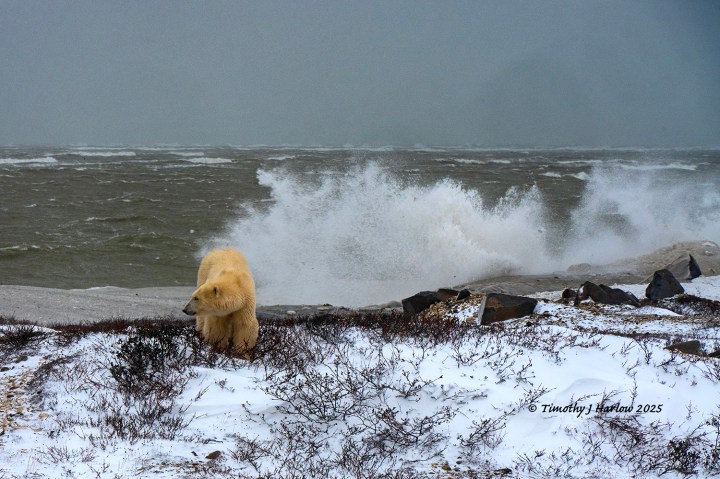

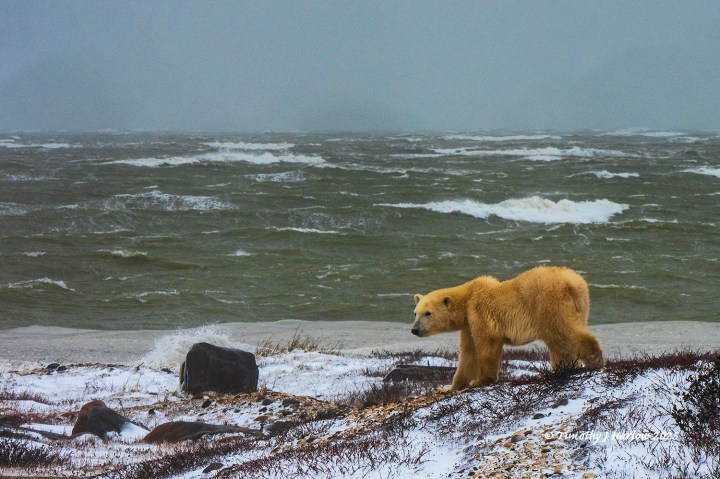
Earlier I mentioned that the polar bears’ main diet consists of seals, which are quite high in fat as the are adapted to the cold north oceans. So, after no seals for over 140 days, these bears are getting quite hungry and probably a bit impatient. The warming climate has pushed the freeze dates back on Hudson Bay now by close to a month from say 20 years ago or more.
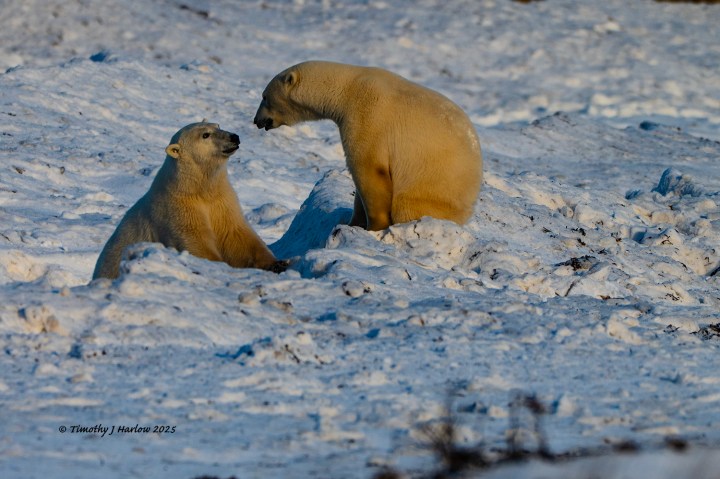
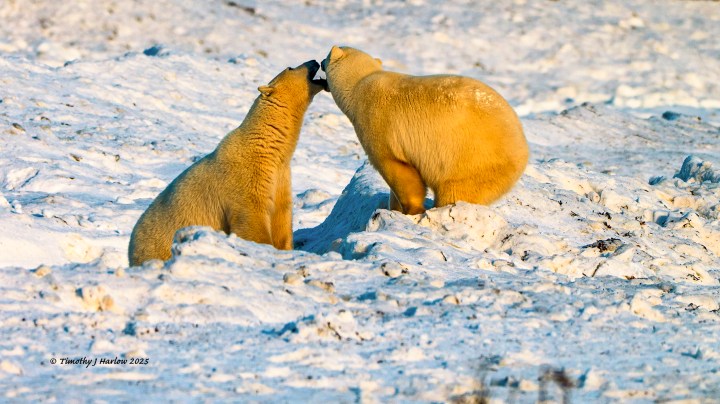
As the weather gets colder into November, the bears begin moving back toward the Bay, so sometimes they are right along the coast, but other times they are moving that way from father inland.

The terrain around Churchill is quite interesting. Churchill lies in a transition zone between the Canadian boreal forests to the south and the arctic tundra to the north. This part of Canada has some incredibly old rocks – some nearly 4 billion years old! These are part of what’s known as the Canadian shield – a very old rock layer just beneath the soil on some places, and exposed in other places. The area has an unbelievable amount of ponds, marshes and lakes, so in the summers it’s mosquito heaven.
Due to the shallow soil and the permafrost, the trees here are fairly small. And the willows are just bushes here, but even a hundred miles north up in Nunavut, those willow bushes become low ground cover.
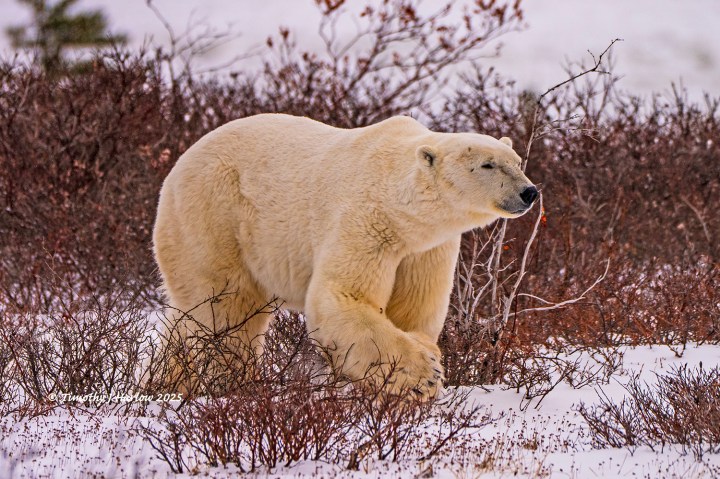
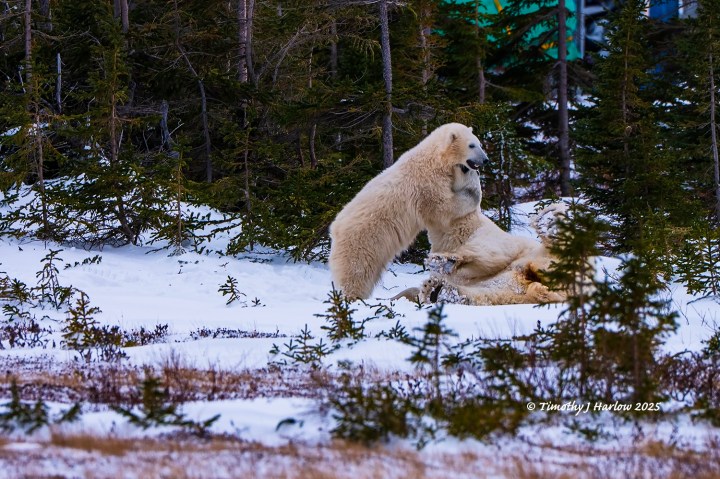
One thing that really amazed me was how playful the bears are. You would think that after so much time with no real meals, that the bears would be quite lethargic. But no, these guys were very happy and playful. We watched one fully grown bear playing with big guy wires from a cell tower, pushing the yellow wire covers up and down.

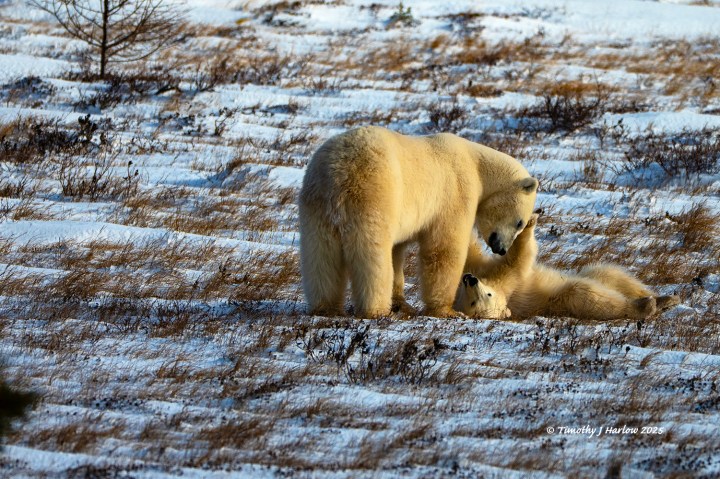
The male polar bears will kill a cub if they get a chance, as this would bring the mother back into breding status. So, the females with cubs are always on the lookout for males.


Yet the bears do everything they can to avoid a direct conflict. The males, too, try to avoid a confrontation with a mother bear. They seem to know that this late in the year with no food for many months a serious injury could mean death for any of them.
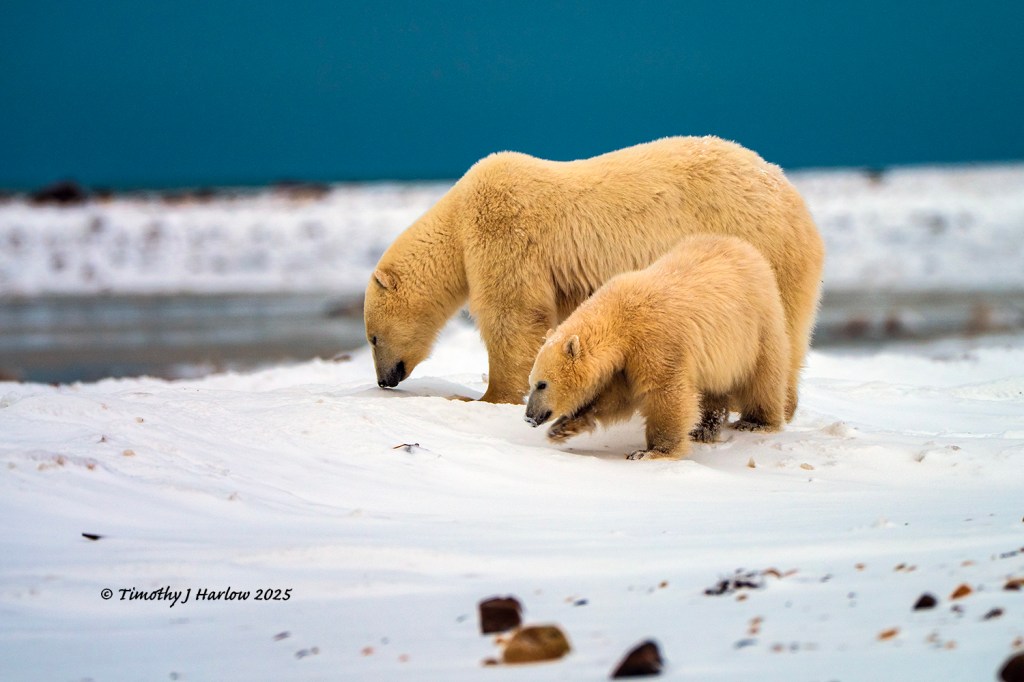
And yet, these bears still find joy in their world. Maybe like us, they find happiness in their family, their surroundings, and the beauty of our world.
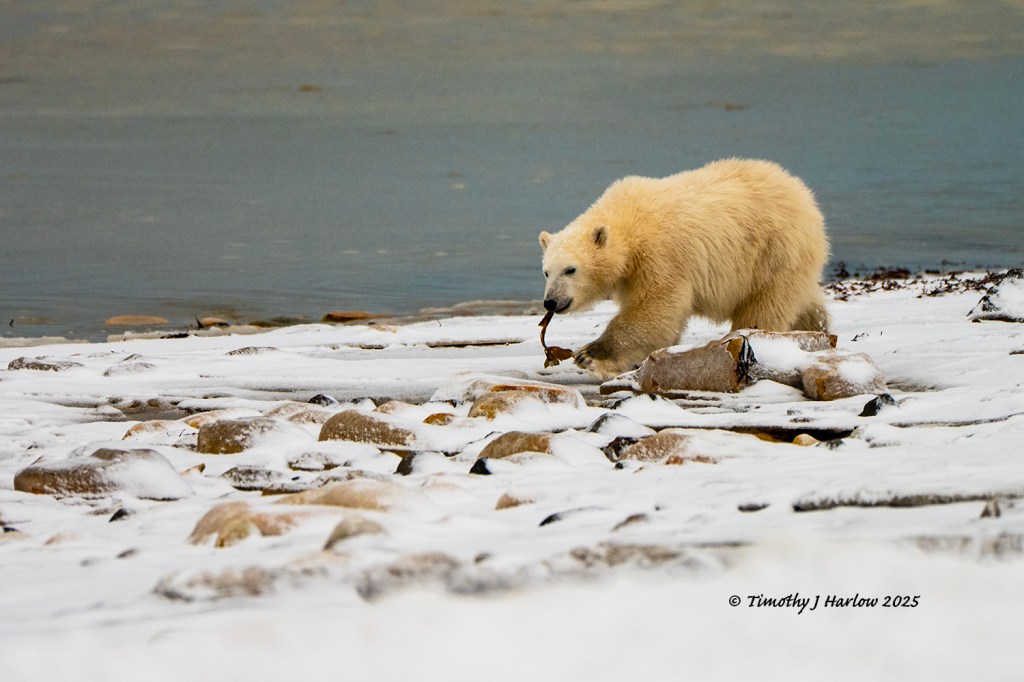
This is a harsh, but beautiful land. The bears are comfortable here. They are well adapted to the cold, the winds and the long time between meals. These ice bears know that this is their home, and they obviously love it. They love their families, and relish in the joy of coming across an older sibling or a parent. Really, they are not so different from you and I.

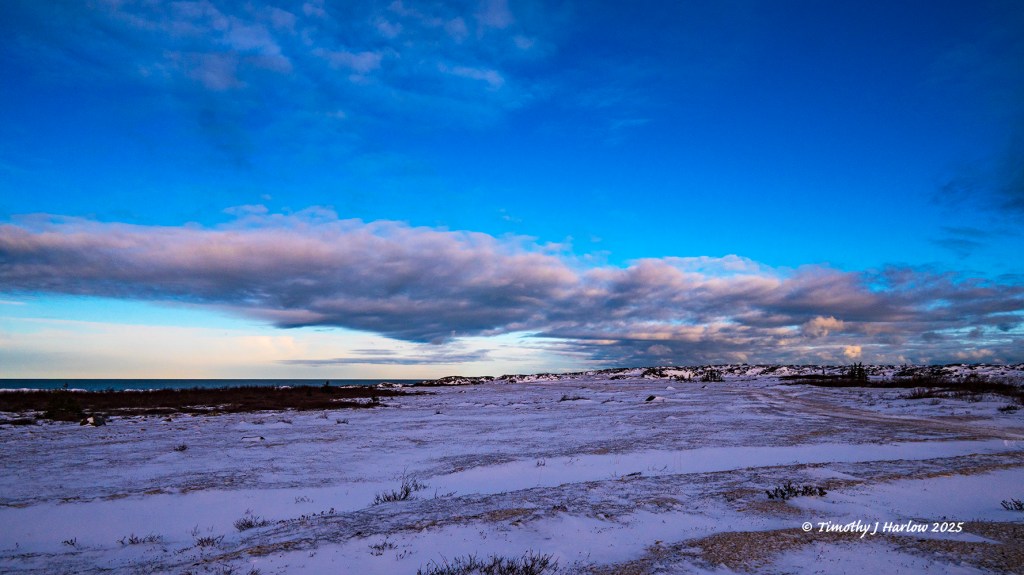
Well, I hope that this has been a good introduction to the land of these ice bears. The beauty in this land is just simply astounding. I have never seen skies so pure and so colorful. I really hope that you have enjoyed this post at least a little bit as much as I enjoyed the time in Churchill. But, my wife says no to a winter cabin here!
Thank you so much for taking your time to visit my site, and remember to get outside and have fun! Part II will be coming soon.


 Tim's Viewpoints & Visuals
One thought on “The Wonders of the Land of the Ice Bears”
Comments are closed.