

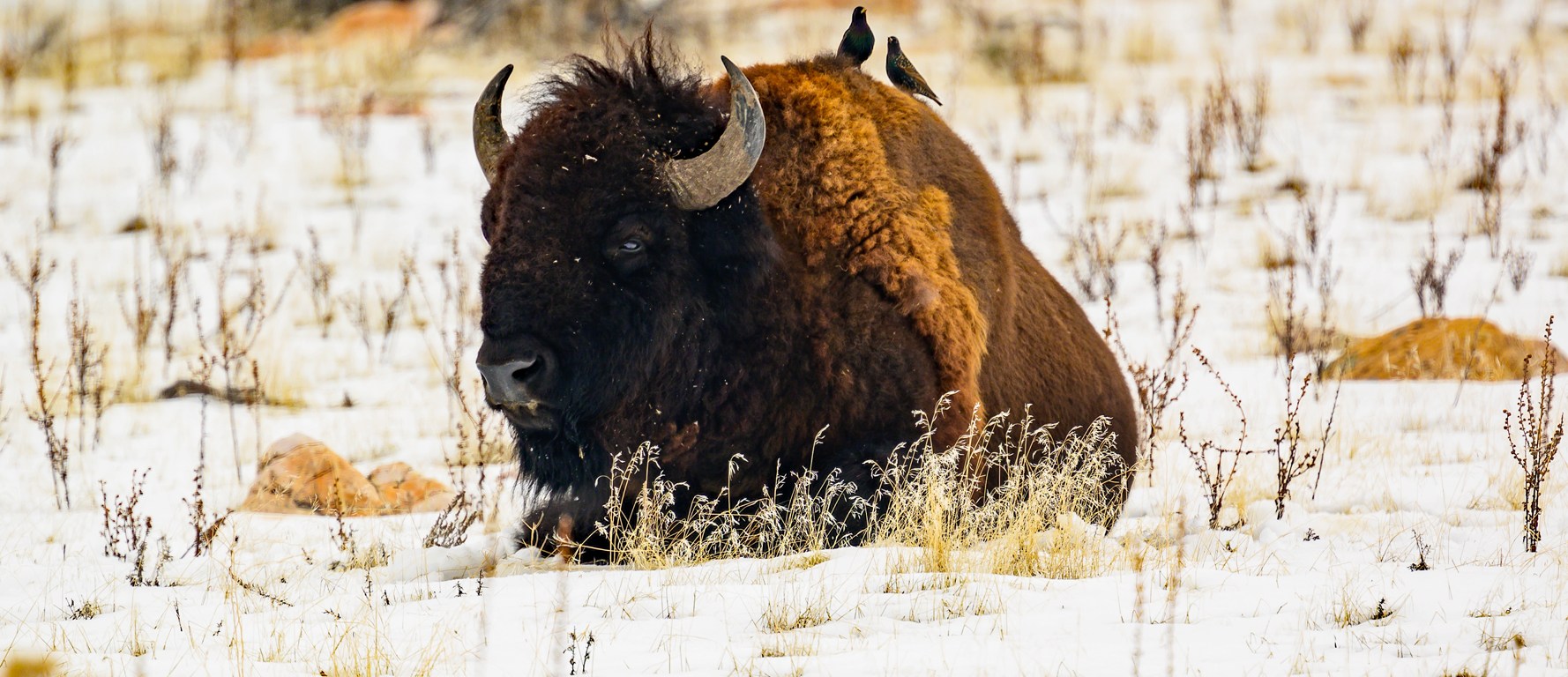
In the week between Christmas and New Year, I had taken a long drive up to Antelope Island in the Great Salt Lake to photograph the bison that inhabit the island. And if you read that post, you know that I saw none – zip, zero, nada. Well, that really bugged me, and I just couldn’t get that out of my head.
So, I came up with a plan B; I made an RV reservation to camp at the park (Antelope Island State Park) for an entire long weekend in mid-January. Other than towing the trailer up Interstate 15, it was an easy 1.5 hour drive from my place to the campsite on the island. (Friday traffic in the greater Wasatch Front is horrible, and I-15 is scary on the best of days.)
I spent a lot of time after the December drive thinking about the best way to accomplish my goal of photographing the bison, and spending a few days right there seemed to be a good idea. And it was!
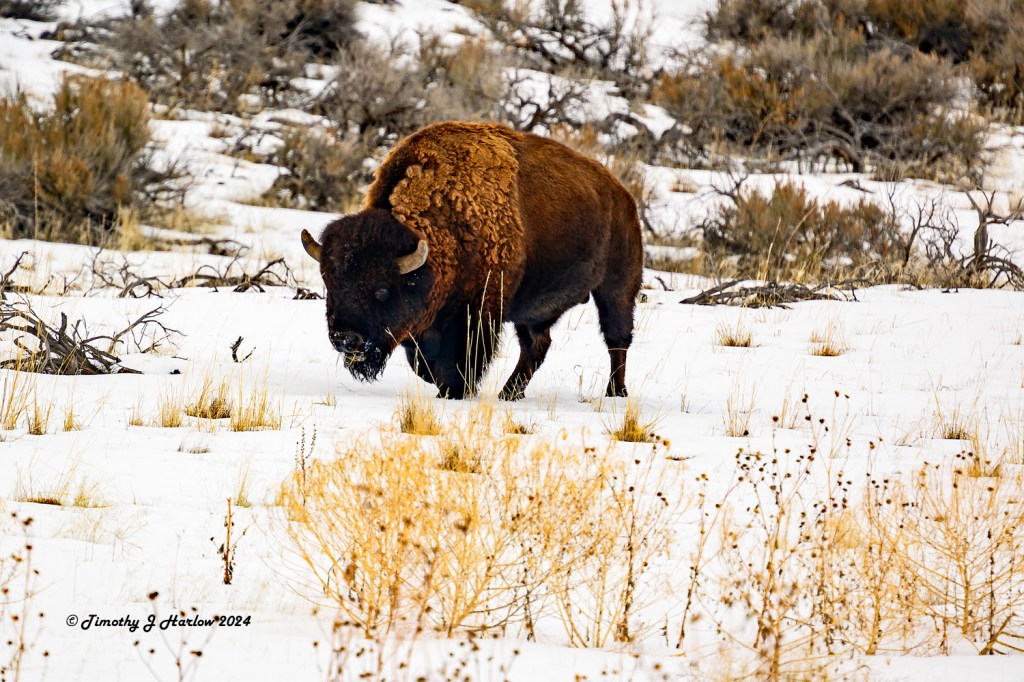
As soon as I pulled into the campground, I spotted 3 bison grazing at the south end of campground. So after getting the trailer all situated, I got some lunch, then headed out with my photo gear to start photographing. These were 3 very large bison. I was just going to walk down the road to the bison, but by the time I got done with set-up and lunch, they were standing right next to the road at the end of the campground. Not wanting to get myself killed, I got in my truck, very slowly drove by them and then parked a ways away. Then I got my gear and was able to get on the good side for the light conditions and still keep a relatively safe distance from the “fluffy cows”.
These are BIG animals! Their heads are nearly as large as a regular sized person! And of course they come equipped with some nice horns as well. So, caution is of utmost importance. As we have horses at home and have had them for many years, I have learned alot about reading animals’ body language. That knowledge was quite handy in my interactions with these bison.
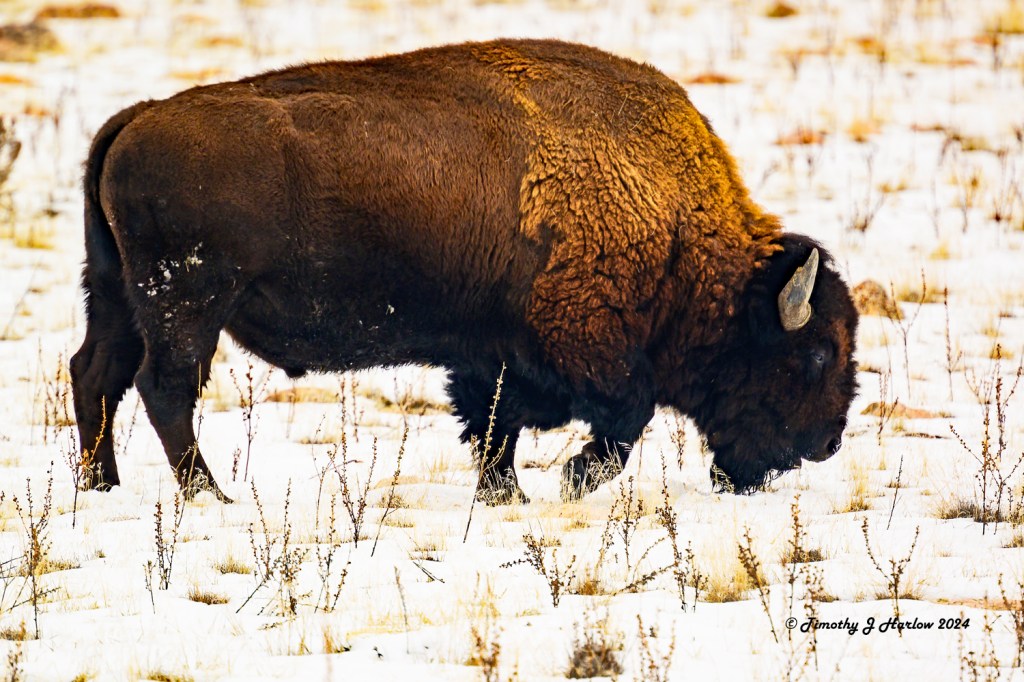
I would start out quite a ways from the bison and watch them carefully for any reactions. If I saw nothing disrupting their routine, I would just pick up my tripod and move closer. Then again, just stop and watch for reactions. If a bison looked at me directly, I would watch for a second. If it didn’t break eye contact, I then moved back until the eye contact stopped. Their first sign of irritation is prolonged, direct eye contact. A raised tail is a real danger sign; I never encountered that.
Interestingly enough, these huge beasts are quite peaceful unless provoked. For most of times I was photographing, they were just scraping away snow to graze, grazing, moving to a new spot or napping. As the new calves will be born in the spring, breeding season was well past, so I didn’t get to see any rowdy behavior.
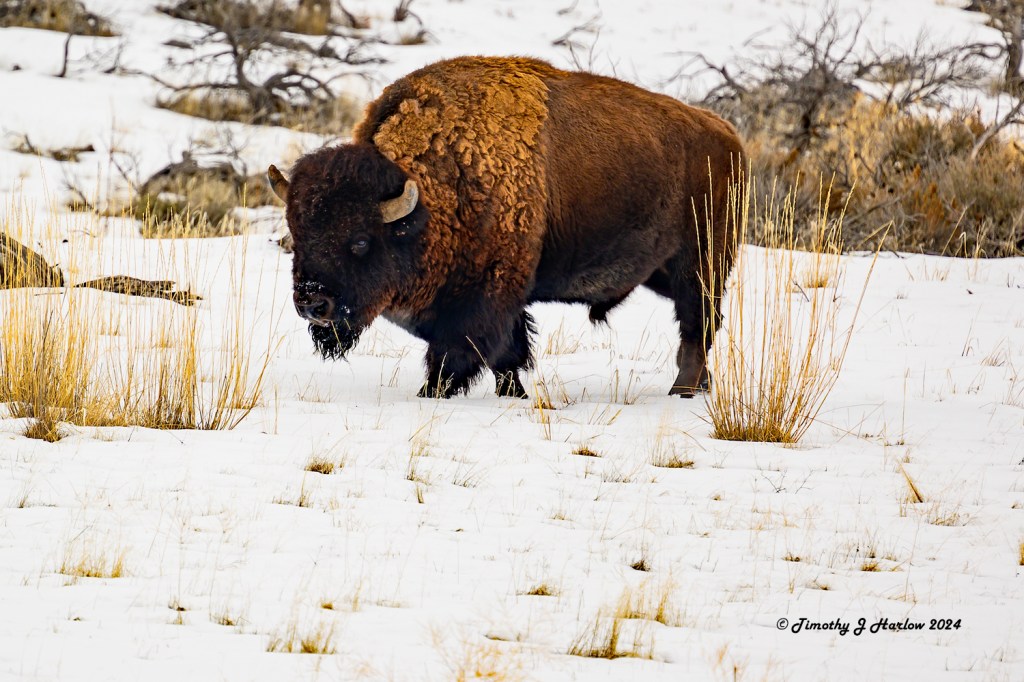
Being the dead of winter, the island wasn’t at all crowded, so the photography was easy from that standpoint. Later Friday afternoon, I drove around a bit and found a larger herd a mile or so from the campground. They were much farther off the roads, so I had a decent hike to get to a good distance from which to photograph. Having now spent a few hours out with the big dudes, I was getting more comfortable with their body language.
Photographing these bison was not as easy as it first appears. Being winter with snow on the ground posed a good challenge. The bison are very dark animals, and their heads are the darkest part of their bodies other than their legs. With the snow, I had to be really careful not to overexpose the snow, but yet keep enough brightness to show detail in their faces. And here is northern Utah, the sun angle in deep winter is pretty low, so I had to really make sure I was photographing the bison from an angle with the sun, not looking more into the sun.
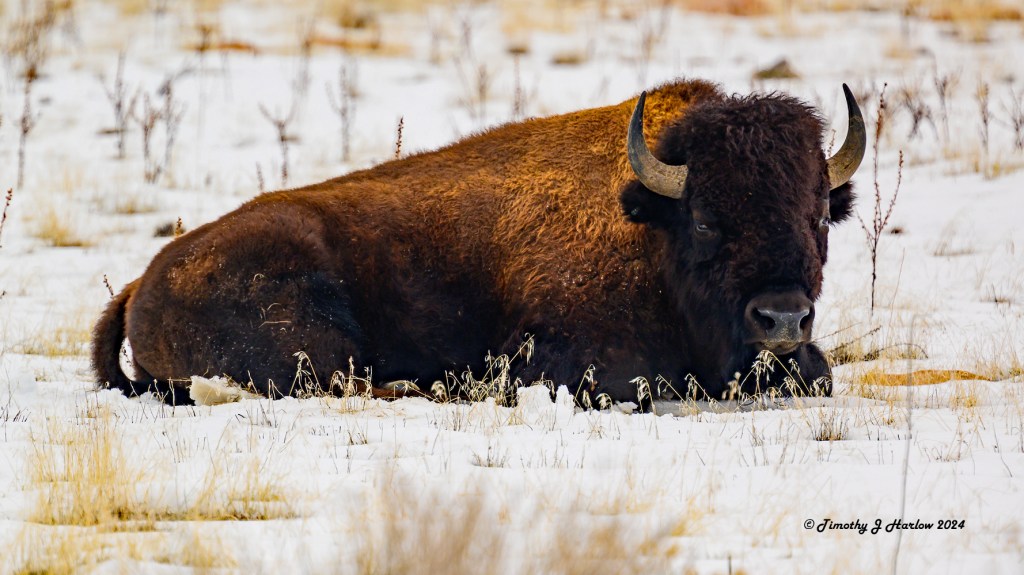
I was using my Nikon Z50 with a 100-400mm Nikon Z zoom lens. So, with the Z50’s cropped image sensor, this gave my lens an effective focal length of about 600 mm at full extension. For some of the shots, I would have preferred a bit longer lens. Why? These beasts can run at more than 35 mph (56 kph)! So, again keeping a safe distance is wise. I have seen bison literally toss stupid people 25 to 50 meters leaving them with horrific injuries, including deep gore woulds from those horns. So, please remember – DON’T PET THE FLUFFY COWS.
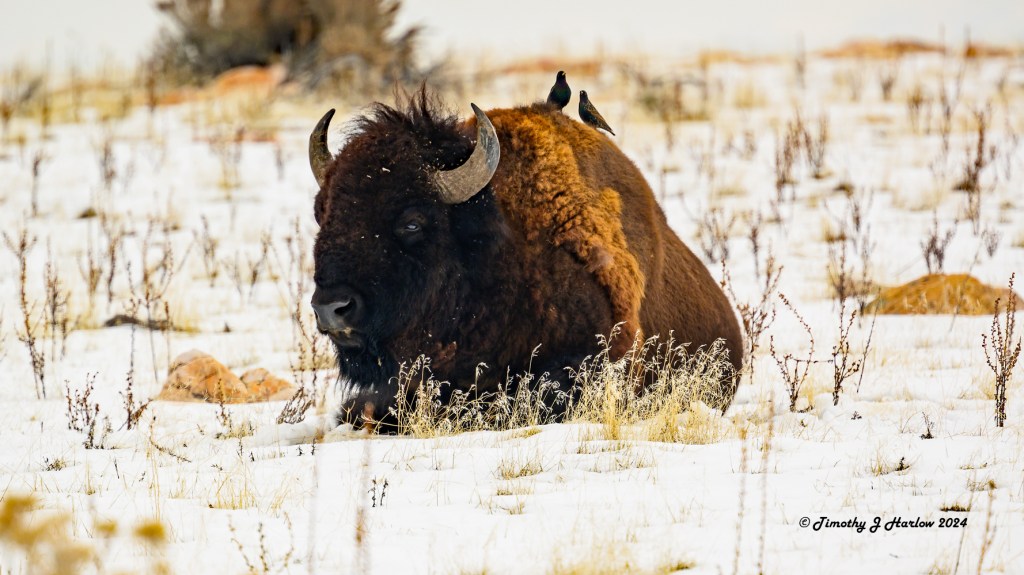
Anyway, I felt really lucky to be able to find so many cooperative subjects on this trip, and while it was quite cold, the weather was nice providing clear views of the bison. And after spending the better part of two days with the big dudes, I was really taken with how they were so peaceful. These herbivores certainly have the capability to make life pretty miserable for someone/something they perceive as a threat, but left alone to go about their day, they are just so calm and laid back.
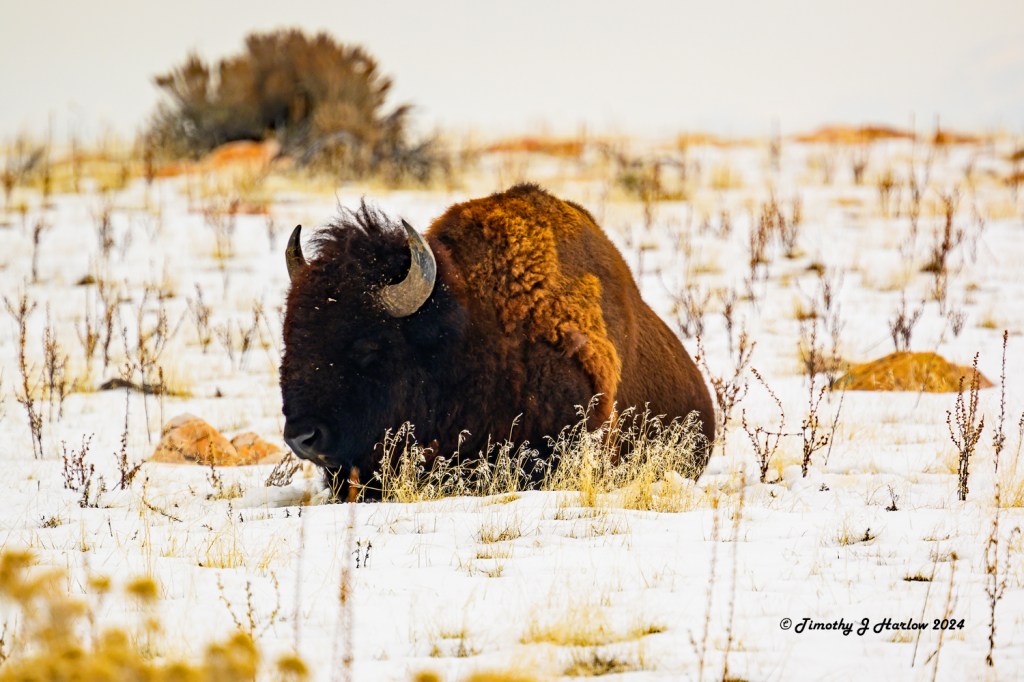
This was really a fun weekend being able to spend time with such magnificent animals. I think the camping idea worked really well as it allowed me to just be really relaxed, and spend lots of time being around the bison, getting comfortable with them, and also being able to photograph with decent light conditions. And hey, I wasn’t exactly roughing it with my trailer. It has a full kitchen, a nice queen size bed, full bathroom and great furnace. (I am getting too old to sleep on the ground in a cold tent in January.)
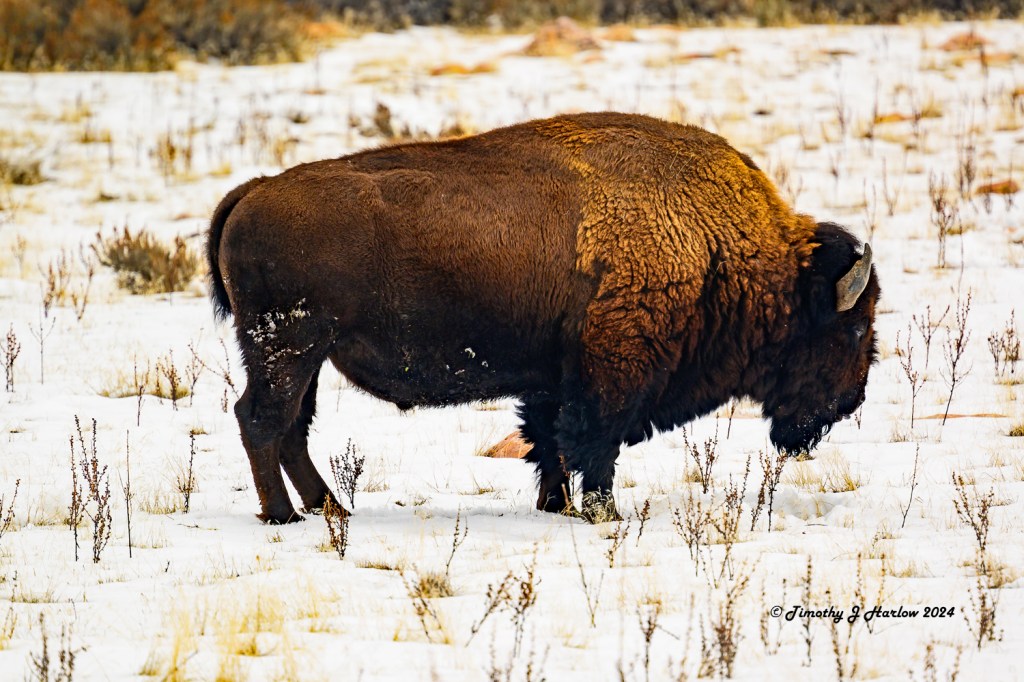
Well, I hope you have enjoyed my fluffy bison experience as much as I did. Thank you very much for taking the time to visit my blog; it really means a lot to me that you stop by and read my stuff. Happy travels and stay safe out there – and don’t pet the fluffy cows!
By the way, there is more to come from my winter Antelope Island trip, so watch for for my next post.


 Tim's Viewpoints & Visuals
We all stand on the shoulders of giants, our forebears from who’s genes we derive.
You make the road by walking it.
Ben Macri
LikeLiked by 1 person