

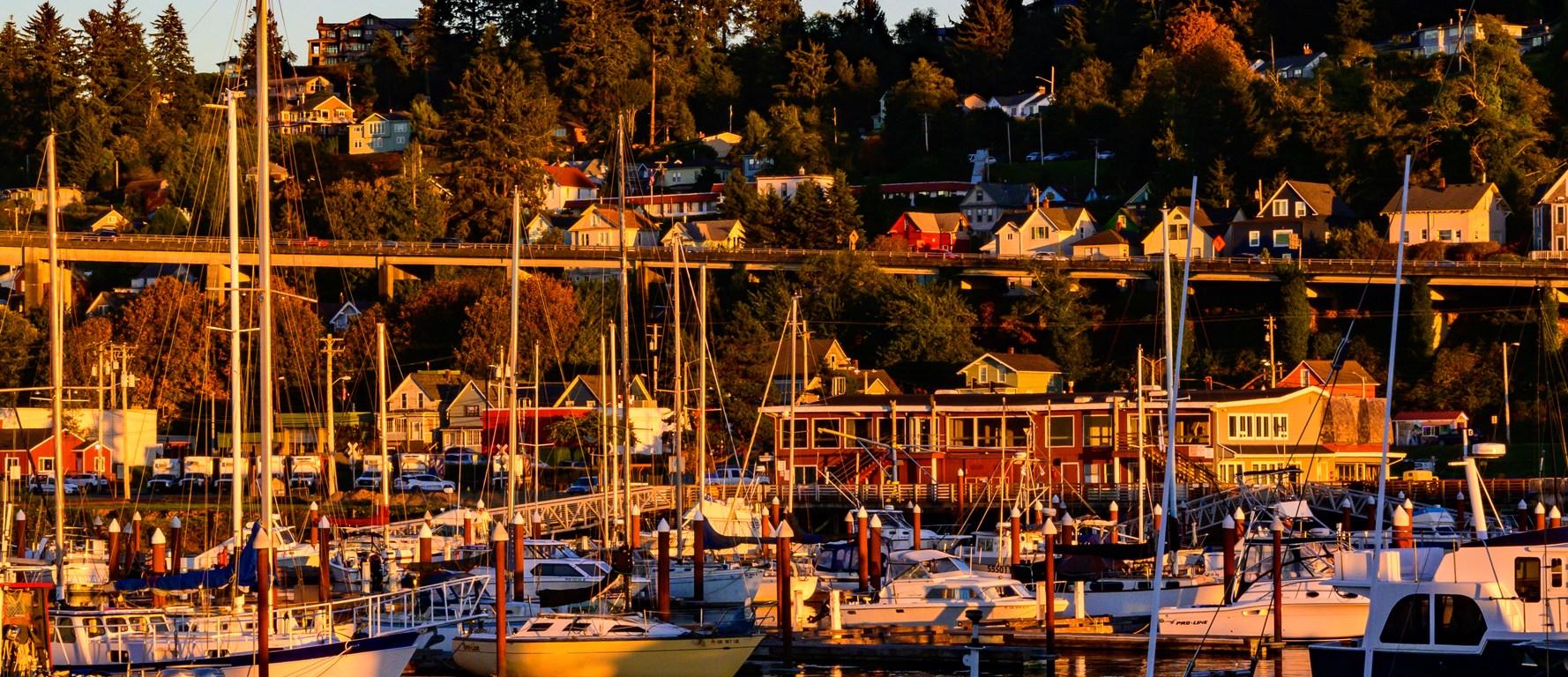
Early last month I was in Oregon visiting clients in Portland. Because Portland, Oregon is about 800 miles (1287 kilometers) from home, I don’t get up there all that frequently – about once per year. So, besides the day I spent hiking up Mt. Hood, I took a few extra days to go out to the northern Oregon coast and used Astoria as my base.
Astoria is a seacoast town that was started in 1811 and was the first permanent American settlement west of the Rocky Mountains (Wikipedia). Astoria is an absolutely beautiful little town located on the very northwest tip of Oregon on the south side of the Columbia River. The town was named after John Jacob Astor; his American Fur Trading Company founded Fort Astoria in 1811, which became the town of Astoria. (For a bit of historical trivia, John Jacob Astor’s great-grandson, John Jacob Astor IV died on the RMS Titanic in April of 1912.) The town was incorporated by the Oregon Legislature in 1856 (Wikipedia).

US 101 heading up to the Astoria-Megler Bridge that crosses the Columbia River.
The Lewis and Clark expedition had only first seen the mouth of the Columbia River from the Washington state side only in 1805. In fact, their expedition spent the winter of 1805-1806 right near Astoria at what they called Fort Clatsop (only 6 to 8 miles south of Astoria depending upon your route). And then only 5 years later, a small town was born in what had been complete wilderness. Of course, the indigenous peoples had been here for a few thousand years with their own civilization.

Remember, in the early 1800s, there was no Panama Canal. A trip from Europe involved not just crossing the Atlantic, but crossing the equator, surviving the incredibly rough seas at the tip of South America, the Straits of Magellan, and then sailing all the way up the Pacific Coast of South America and a good portion of the North American coast. It’s no wonder that Captain John Meares called the northern coast at the mouth of the Columbia River Cape Disappointment.
Let’s put this into perspective. Captain Meares and his crew had sailed for many, many thousands of miles from England all the way around South America, and then after many months of arduous travel, they never really found their objective – the actual mouth of the Columbia River, what would now be the Astoria, Oregon area. This is just almost unimaginable!
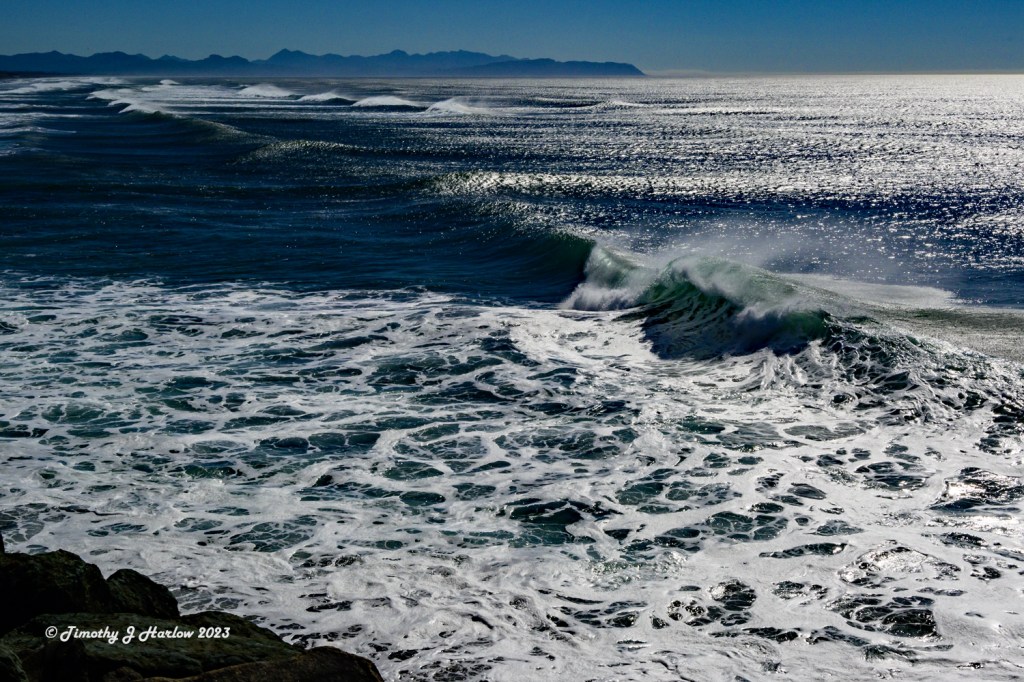
So, what is around Astoria that makes for a fun destination? First, if you are interested in history, the city and surrounding areas are just chocked full of history. Lewis and Clark’s winter encampment, Fort Clatsop, has been reconstructed and is just a few minutes from town. If you are interested in maritime history, there is an awesome museum in Astoria called the Columbia River Maritime Museum. It’s got tons of cool exhibits and has an excellent mapping of the numerous shipwrecks found near the mouth of the Columbia River. There is even an awesome diorama of a US Coast Guard rescue vessel in super rough seas.
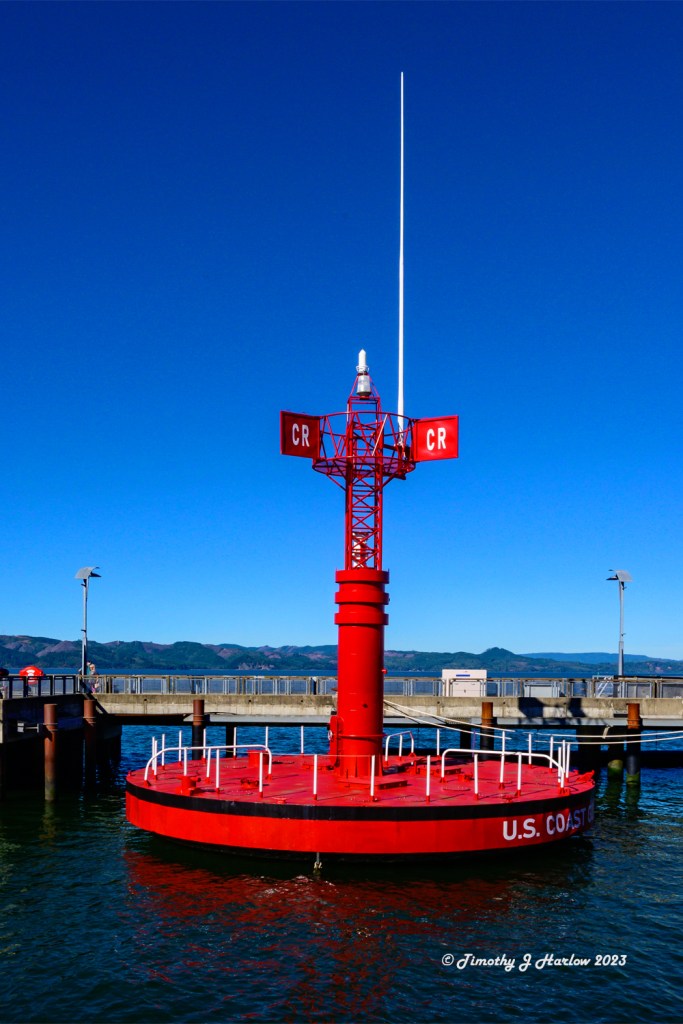
In fact, the mouth of the Columbia River, where it pours into the Pacific Ocean, is known as the graveyard of the Pacific. It’s so treacherous, even today, that all ships entering this area (called the Bar) must have a Bar Pilot accompanying the vessel as it crosses through the river to ocean zone.

There is an old lightship, the Columbia, moored at the museum that was used until the mid-twentieth century as an aid to navigating the Bar area. You can tour the ship as part of the museum package.


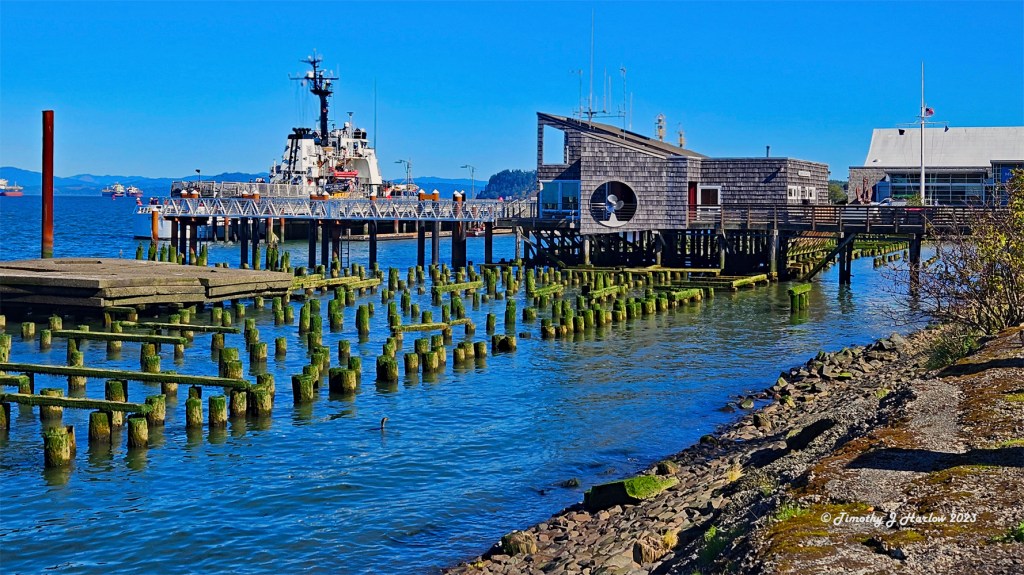
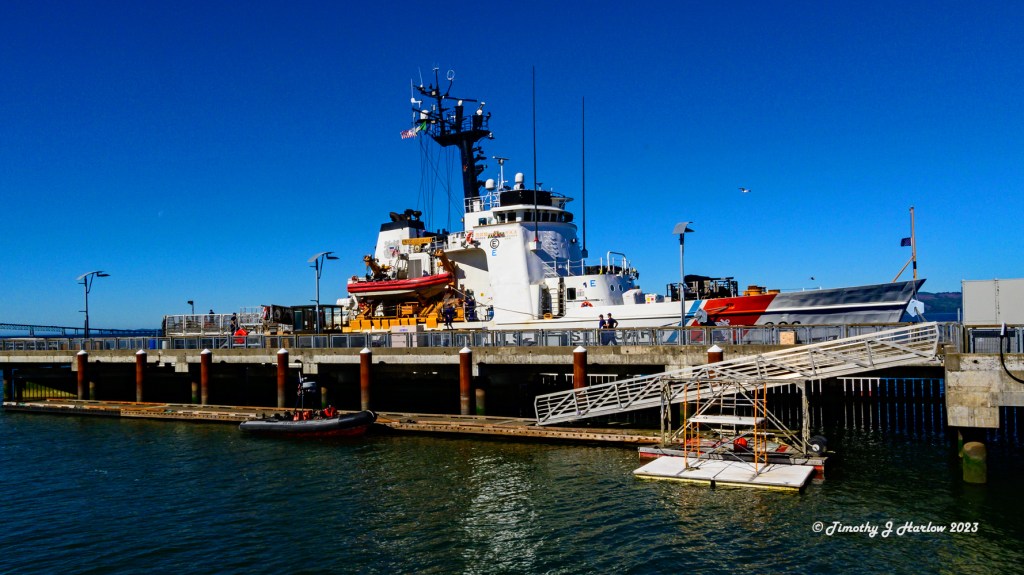
Next door is a major Coast Guard station where you can see the US Coast Guard Cutter Steadfast unless it’s out on patrol. Astoria is a major US Coast Guard rescue training station due to the nearly continuously harsh conditions of the Columbia River Bar.
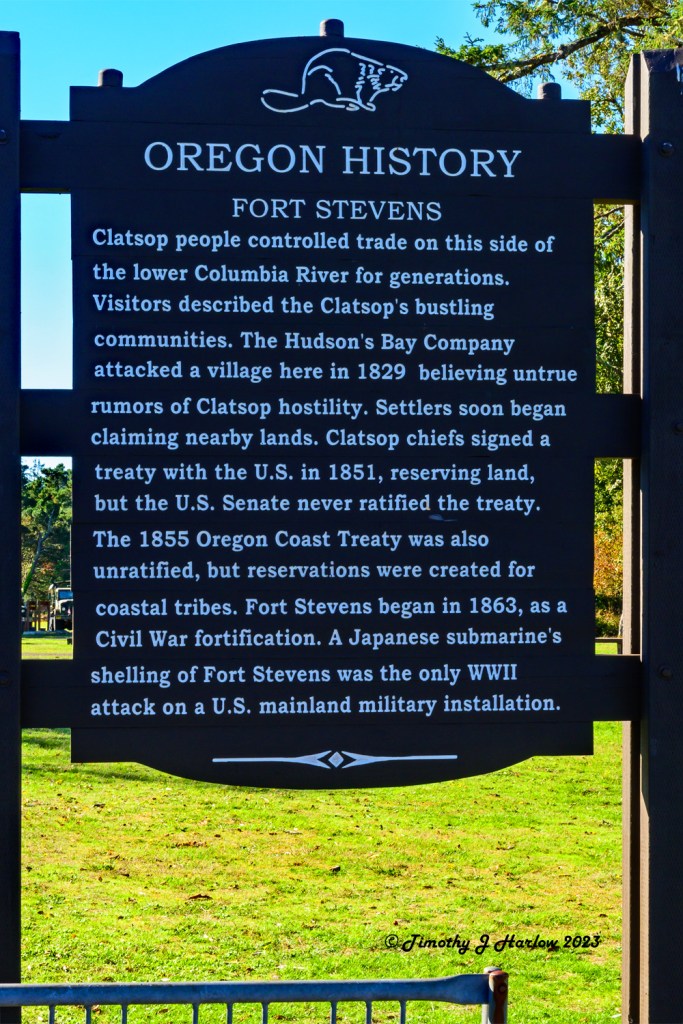
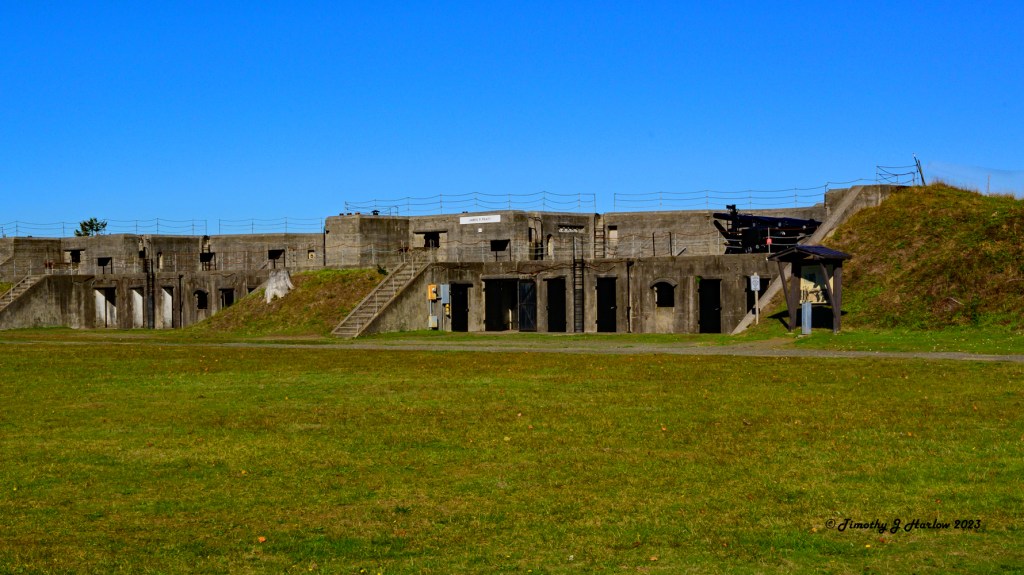
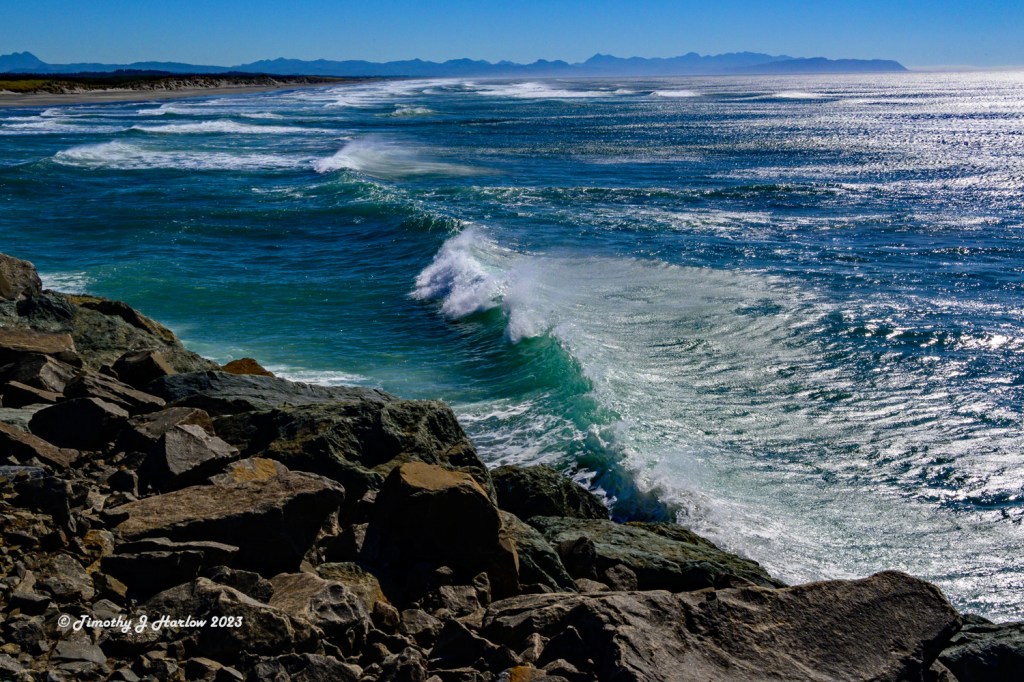
A few minutes southwest of town is Fort Stevens State Park. A park pass for one day costs only $5 US! For that, you get access to all of the areas in the park. There is the old Fort, which is the only place in the continental United States to experience a Japanese attack in World War II. The park has numerous beach accesses for fishing, sightseeing, camping, bird watching, and more. One access is home to the remains of the wreck of the Peter Iredale, an English 4 masted steel barque shipping vessel that ran around here in October of 1906 during a storm. There is not much left now, but it’s pretty cool to see.




The Astoria-Megler Bridge (US Highway 101) crosses the Columbia River from Astoria to the Washington side and rises to 196 feet (60 meters) above the river at high tide. It was built to withstand winds of 150 miles per hour (241 kph). It is quite a sight, rising right out of the city and crossing almost 4 miles of river. I have crossed this bridge many times in both good weather and bad, and I always have to just keep telling myself – look straight, drive straight, don’t panic!


Astoria has a beautiful marina that sits just to the west of the Astoria-Megler Bridge. Here, you’ll see everything from private sailboats to commercial fishing vessels to research ships. And if you like fresh seafood, well, your choices are nearly unlimited. And, it’s only about 20 miles up to Cape Disappointment from Astoria, too.
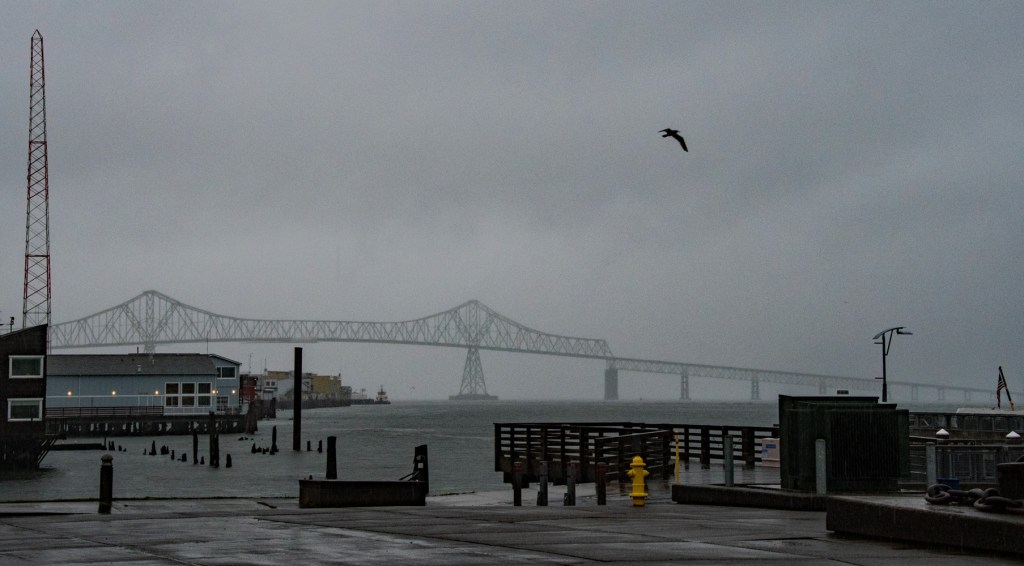
The weather in Astoria is not always sunny and beautiful, as in most of these photos. There are about 100 plus days of fog here eqch year, and in the fall, it can get quite wet.
So, if you are looking for a laid back place from which to explore the Pacific Northwest coast of northern Oregon and southern Washington, I really can’t think of a much better place to use as a base.

As you can probably tell, I absolutely love the Pacific Northwest. Hopefully, this tour of the Astoria, Oregon area inspires you to make a visit.
Thanks so much for stopping by my blog; it means a lot that you all take time out of your busy day to visit my website. Have fun, and stay safe in your adventures.


Thank you!
You make the road by walking it.
Ben Macri
LikeLiked by 1 person